- Digital Surfer
- Posts
- How To Find Your Real SEO Rivals
How To Find Your Real SEO Rivals
Google Making GSC Useful Again; Multilingual Queries in AI; LLM Seeding; Complete AI Crawlers List; Future of Newsletters; Best AI Video Model Yet; and Much More!

Yoyao
December 06, 2025 • Est. Learning Time: 9 minutes
In partnership with

Who Your Real Competitors Are …

Most SEO tools are grading you on the wrong map.
They show you who ranks for a random pile of keywords, then call it a leaderboard. The problem is simple.
Half those sites are not real competitors and half the keywords do not matter to your brand. They do not share your audience, product or real topic footprint.
Your real competitors are the brands going after the same audience and topics you care about.
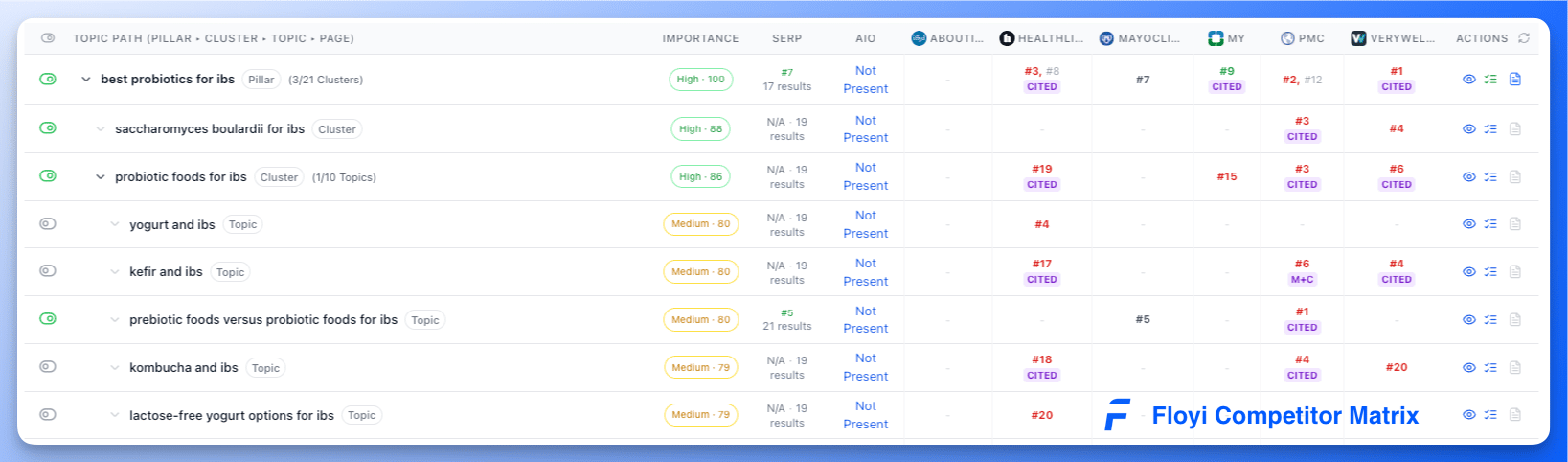
I wanted a way to see those competitors inside my topical map. Who actually overlaps with the topics that matter to my audience. Where they are strong. Where they are weak.
So I built the new Competitor Matrix inside Floyi’s Topical Authority Planner.
It compares you against the domains that share your map, not a generic keyword dump. Benchmark yourself on your topical map and you’ll spot the pillars you can realistically steal, and the noise you can stop chasing.
If you want to see it in action, I recorded a Competitor Matrix walkthrough video here.
AD
74% of Companies Are Scaling AI with Real-Time Web Access

Scaling AI shouldn’t be slowed down by blocks, downtime, or slow processes. Manual fixes and unreliable public web data put a cap on what your automations and AI agents can achieve.
Bright Data provides seamless, real-time access to public web data even from challenging sites, guaranteeing a continuous pipeline for your models and agents. Your automations run, your AI trains on live data, and your teams stay focused on innovation and growth, not troubleshooting.
Companies using Bright Data are already scaling their products and achieving real ROI with public web access at scale. Move at speed and scale with Bright Data.
SEO + GEO
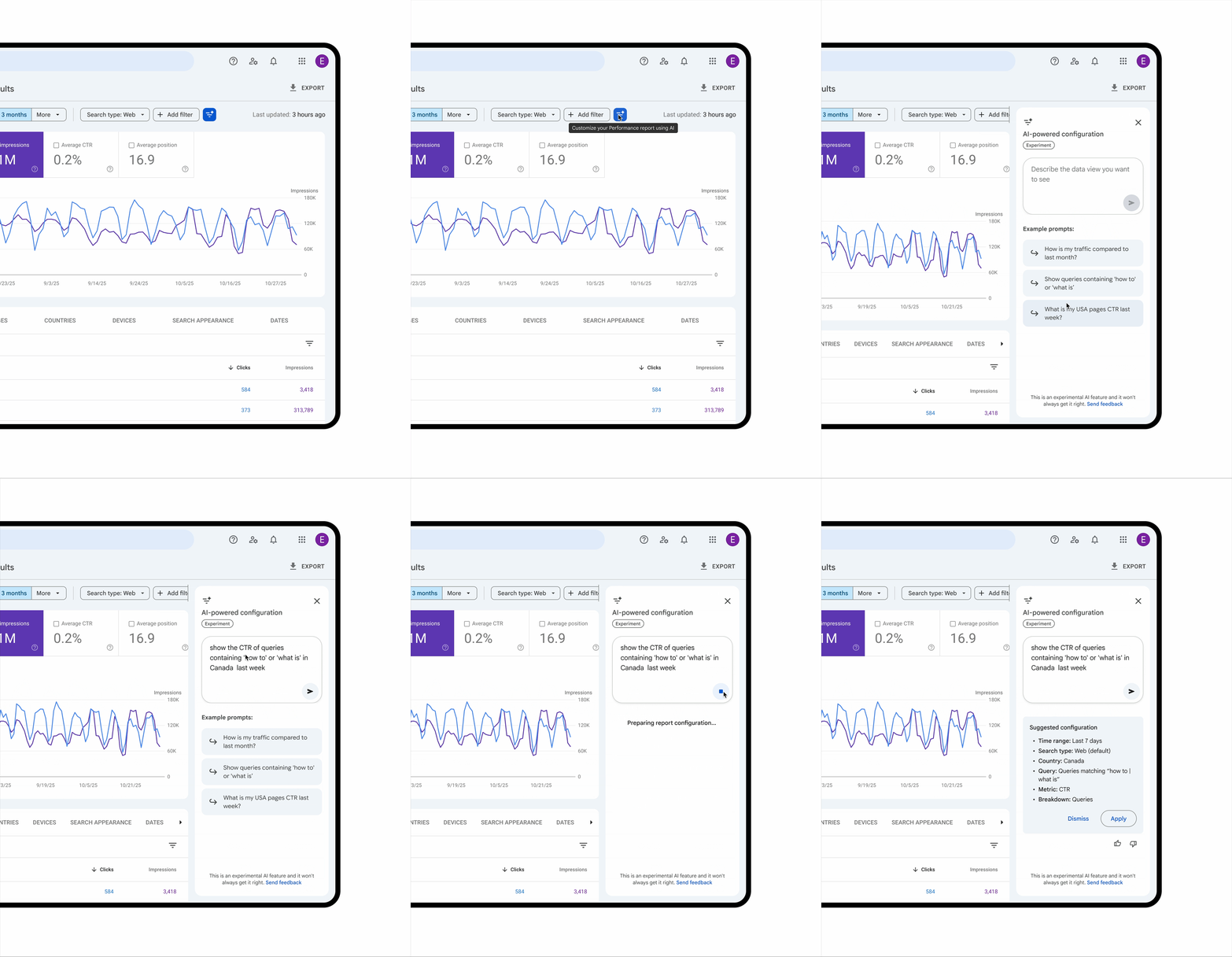
In this post, Google shows how to stop fiddling with filters and let Search Console do the setup for you. Describe what you want in plain language, and AI builds the Performance report for you with the right filters, comparisons, and metrics. You can ask for mobile-only queries that contain a word, quarter-over-quarter blog traffic, or CTR and position for a specific country. It only works in the Search results Performance report, and it will not sort or export for you.
Daniel Waisberg shows how Search Console Insights gives a quick, centralized snapshot of your Google Search performance and practical actions to take. Inspect the Your Content card to find Top pages, Trending up pages and Trending down pages. Use the Queries card to see clustered search terms, Top Countries to spot regional opportunities, and Branded Traffic to measure awareness and identify content gaps, prioritize growth signals.
Angela Clark explains how agentic commerce changes who your real audience is: AI agents that read your product data, then decide what shoppers see. She urges brands to structure product feeds with clean titles, clear attributes, rich media, and consolidated reviews and Q&A so agents can instantly match intent. She highlights new OpenAI feed fields like relationship attributes, variants, and metadata to show freshness and trust.
Glenn Gabe stress-tests how AI search tools handle multilingual queries and shows why international sites cannot just rely on hreflang. His tests reveal that Google and Bing usually surface the correct language version, while ChatGPT, Perplexity and Claude often answer in the right language but link to the wrong (usually English) URLs. Copilot and Gemini perform better because they lean on Bing and Google, although Gemini hides sources until prompted. Glenn advises to audit hreflang at scale, test your key queries in multiple languages, and monitor how AI search is routing users to your localized content.
Johannes Beus explains how to turn your site into citation fuel for Google’s AI Mode by treating pages like structured answer databases, not blog essays. The winners use tight response blocks via listicles, step by step guides, rigid templates for YMYL topics, data tables, and on page FAQs. They make authority explicit with JSON LD, clear authorship, experts, and visible “last updated” dates. Finally, they engineer strict machine readability with semantic HTML, table of contents menus, stable IDs, and data attributes so AI can extract the exact answer, every time.
My Take: This lines up with what I have been saying for a while and why Floyi bakes these patterns directly into briefs and drafts. The study is framed around Google AI Mode, but the same behavior shows up across other AI search systems. People keep repeating that LLMs do not read schema or structured cues. Early models struggled, sure, but that is no longer the world we are in. As AI generated content floods the index, machines reward whatever is easiest to parse, segment, and cite. The clearer you make the signals, the more consistently you get pulled in as a source.
Sarah Perez explains how Google is testing a tighter link between AI Overviews and AI Mode so users can jump from a snapshot answer into a chat without changing tabs. For SEOs and content teams, this means queries that start as “quick fact checks” can slide into deeper research flows inside Gemini. The experiment is mobile only and global, with Overviews feeding AI Mode follow-up questions on the same screen.
My Take: I’ve been seeing this for a while now. On desktop too. Maybe my account is in the Labs or receiving early testing, but I’m not sure how it's different from what I’ve been seeing.
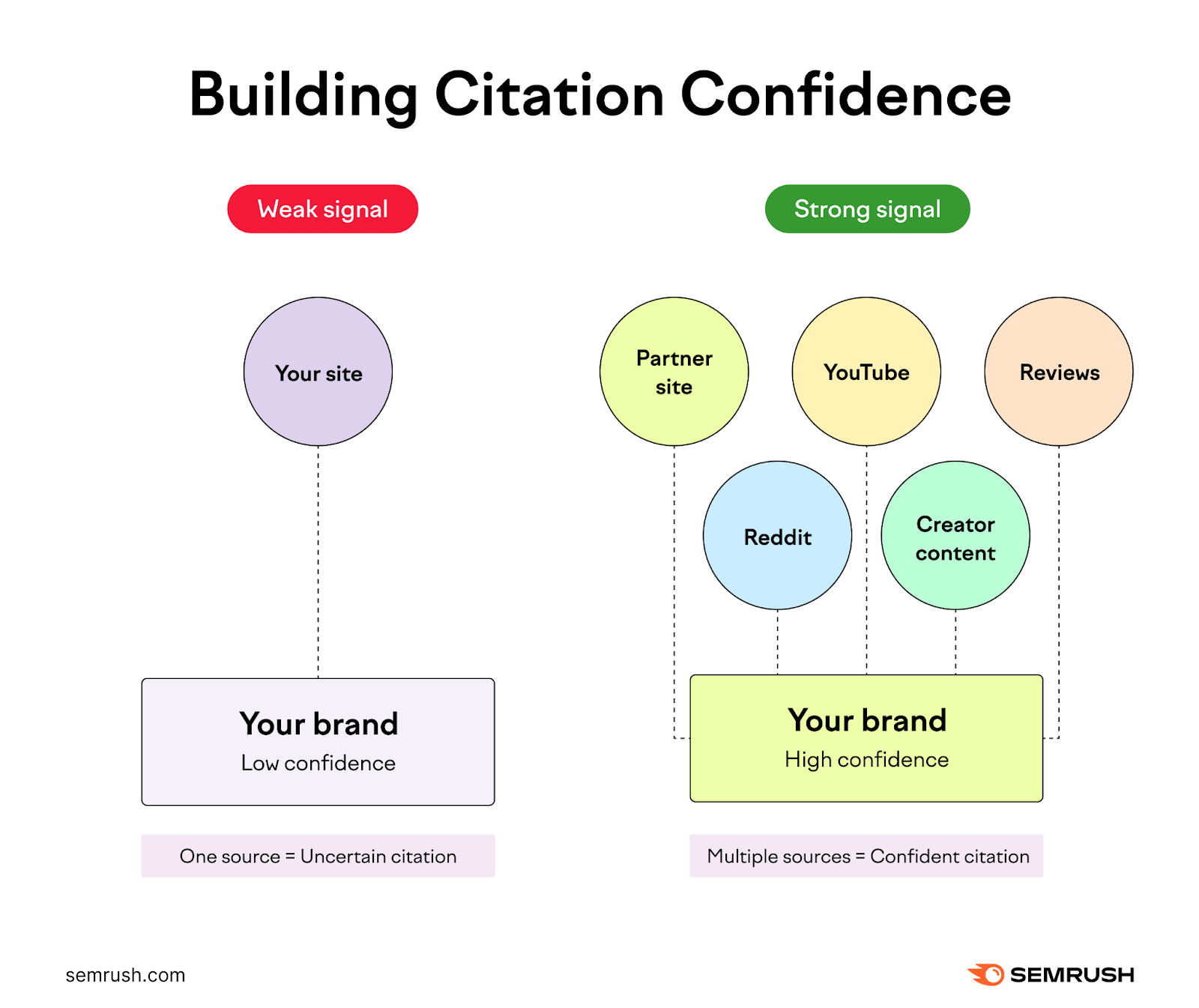
Leigh McKenzie shows how to make AI search talk about your brand instead of your competitors. Start by publishing a clear, structured home base that explains what you do, who you serve and the problems you solve. Then seed that story across partners, review sites, communities, YouTube videos, and social posts so models keep seeing the same message. Encourage specific customer reviews that describe use cases. Finally, track which prompts cite you, spot gaps and refresh content. The playbook is simple: consistent structure, context and repetition across the web.
Vahan Petrosyan shows you how to stay visible in AI search while protecting your servers from hungry crawlers. He lists verified user agents for GPTBot, Claude, Gemini, Perplexity, Meta and more, with robots.txt patterns you can copy, plus links to official IP lists so you can allow good bots and block fakes. He explains how to read server logs, set trap URLs to spot unidentified agents like you. com, and use firewall rules or Wordfence in WordPress to allowlist trusted IPs and block imposters before they eat your bandwidth.
SEO + GEO Ripples
Barry Schwartz reports that Google briefly published an LLMs.txt file on the Search Central docs subdomain after months of saying most sites do not need one, that Google will not use it, and that you can noindex it. The file quickly vanished with a 404 and is now being framed as a platform accident. Riiiight…accident.
Barry Schwartz explains why so many SEOs are seeing average position improve while impressions drop in Search Console. Google killed the num=100 parameter, which cuts out scrapers and tools that used to generate “ghost impressions” from deeper result pages. Now impressions are closer to real user views and rankings may look better without any true SEO change.
Matt G. Southern explains that Google Maps now lets users review businesses using a nickname and custom avatar instead of their full Google identity. The key move for marketers is to lean into this. Update review request emails and in-store prompts to mention that customers can post under a nickname, especially in sensitive verticals like legal, medical and financial services.
AI
Tom Warren reports that OpenAI is fast tracking GPT-5.2 after Sam Altman called a “code red” to answer Google’s Gemini 3 gains. The update is slated for around December 9 and is meant to close the gap in reasoning and performance, with internal tests reportedly putting it ahead of Gemini 3.
Dan Petrovic shows that most AI chats are short, transactional conversations where the model does the heavy lifting, but the real opportunity sits in the long tail. Only 35% of sessions show commercial intent, and those skew toward early awareness and consideration, where content that explains categories, compares options and validates decisions can win attention. Two thirds of use falls outside the funnel, in brainstorming, planning and learning, which is a goldmine for tools and content that act as thinking partners, not just answer machines. Treat “post purchase” help as a content moat, not an afterthought.
In this interview with Christina Kim and Laurentia Romaniuk, they lay out practical ways to get more from GPT-5.1. Treat the new default reasoning models as smarter partners: push them with hard, domain specific prompts, and use the model switcher when you need deeper analysis. Set and persist custom instructions, enable memory to avoid repeating context, and toggle or delete memory when needed. Experiment with style and trait settings to match tone. Use shared conversation links to debug odd outputs. Ask the model to improve your prompts so it answers at the level you expect for faster, more reliable results.
My Take: This is an interesting listen on how they train and come up with new models. If you like to go under the hood, this is good. They also say they have 800m weekly users now.
Reza Moaiandin explains how “AI poisoning” lets bad actors skew LLM responses against your brand with as few as 250 malicious documents, and what you can actually do about it. He urges marketers to regularly test brand queries across major AI tools, separate AI citation traffic in analytics, and treat sudden drops as potential warning signals. He also pushes for proactive brand monitoring across UGC, reviews, and forums so you can catch coordinated attacks early. He argues you should resist gaming LLMs and instead publish accurate, structured, citation-worthy content that AIs want to trust.
The Google Search team shows how to turn Circle to Search and Google Lens into a quick lie detector for sketchy texts and DMs. They walk you through two flows: long press your Android home or navigation bar and circle the suspicious text, or screenshot the message, open Lens in the Google app and tap the image. Google’s AI then flags likely scams, explains the red flags and suggests safe next steps.
Runway writes that Gen-4.5 is now its top-tier text-to-video model, combining higher visual fidelity with tighter control over motion and style. The model hits 1,247 Elo on the Artificial Analysis benchmark, keeps Gen-4’s speed, and supports the same modes like image to video, keyframes, and video to video. For marketers, that means more reliable physics, richer character performance, and consistent looks across photorealistic, cinematic, and animated campaigns. Runway also flags limits around cause-and-effect and object permanence, so teams should storyboard clearly, keep cuts short, and review sequences carefully before treating them as replacements for real footage.
My Take: It’s been a while since I visited Runway, but I’m going to have to visit more. Best AI-gen videos I’ve seen so far.

AI Ripples
New York Times is suing Perplexity for allegedly scraping paywalled articles, ignoring robots.txt, and serving near-identical answers without sending traffic back. The suit claims Perplexity used this material to generate answers that replace a visit to the Times. It follows earlier cease and desist notices and comes as other publishers, including the Chicago Tribune, bring similar claims. The Times argues that Perplexity ignored technical protections and profited from its work while offering a revenue sharing program that has not resolved concerns.
MARKETING
Ramona Sukhraj lays out a clear roadmap for where newsletters are heading and how marketers can stay ahead. She pushes creators to expand beyond inbox only publishing, repurpose issues for the web, and optimize for both search and AI engines. She shows why personality driven newsletters convert better than brand centric ones and how audience aligned formats outperform generic layouts. She urges teams to use AI for planning, segmentation, and personalization while keeping humans in the editor’s chair. Treat newsletters as multi channel assets, tailor them to reader behavior, and build consistent value readers cannot find anywhere else.
Dan Browne explains how the 2026 USPS (US Postal Service) promotions can cut postage costs while helping you modernize direct mail as a reliable channel. Most campaigns can earn a 5% discount by using integrated tech like AI triggers, QR codes or AR, tactile formats, or continuous contact sequences. Catalogs with 12+ pages can get 10% off. Layer on Informed Delivery and Sustainability for up to 7% savings on regular mailings and 12% on catalogs.
My Take: When’s the last time you sent mail? It’s been a looong time. Fedex/UPS/DHL don’t count 😅
SOCIAL MEDIA
YouTube Shorts older than about 30 days are slipping in recommendations, which means your “evergreen” Shorts may be quietly stalling out. Check your analytics for Shorts posted more than a month ago and compare impressions before and after mid-September. If you see the drop, shift your Shorts strategy toward higher publishing frequency, series formats, and fast follow-ups on winners. Keep heavier, evergreen topics for long-form video where compounding still works.
YouTube’s Test and Compare tool now lets eligible creators A/B test up to three titles, thumbnails or combined pairs on each video worldwide. Experiments run for as long as two weeks, and YouTube picks a winner based on watch time per impression, not CTR, so clickbait loses and strong retention wins. Creators can override the winner, read detailed results in Analytics and keep viewers from seeing mismatched versions because each person sees one combo consistently.
TOOLS AND RESOURCES
Roger Montti shows how the Internet Archive Wayback Machine plugin quietly protects your site, content and links while you sleep. He highlights five practical wins: timestamped proof for copyright and DMCA disputes, a last line of defense if your site melts down, and an easy way to rebuild removed or lost pages that still attract links. The plugin also scans outbound links, flags what is dead, then points users to archived versions so they are never met with 404s.
WAYS WE CAN WORK TOGETHER
Floyi - The only AI-powered tool that builds 4-level topical maps. Don’t just plan your content strategy - make it unstoppable.
TopicalMap.com Service - Let us do the heavy lifting. We handle the research, structure, and strategy. You get a custom topical map designed to boost authority and dominate your niche and industry.
Topical Maps Unlocked 2.0 - Unlock the blueprint to ranking success. Master the art of structuring content that search engines (and your audience) love - and watch your rankings soar.
AD
Shoppers are adding to cart for the holidays

Over the next year, Roku predicts that 100% of the streaming audience will see ads. For growth marketers in 2026, CTV will remain an important “safe space” as AI creates widespread disruption in the search and social channels. Plus, easier access to self-serve CTV ad buying tools and targeting options will lead to a surge in locally-targeted streaming campaigns.
Read our guide to find out why growth marketers should make sure CTV is part of their 2026 media mix.
LIKE DIGITAL SURFER?
Find me and others in the Digital Surfer Discord community.
I’d also love to know what you think and if you have any ideas for the newsletter. Reply or email me at [email protected].
I’d also appreciate it if you shared it with fellow digital surfers.
{{rp_personalized_text}}
Have a great week taking your SEO and digital marketing to another level!
And don’t forget to drag the Digital Surfer emails to your Primary Inbox 🌊
Reply