- Digital Surfer
- Posts
- My “Baby” Turned One This Week
My “Baby” Turned One This Week
66 Billion Bot Requests; AI Clone Yourself; Ranking Algos Want User Data; Wiki Editors Show Signs of AI; YouTube Uses Your AI Likeness; and Much More!

Yoyao
January 24, 2026 • Est. Learning Time: 7 minutes
In partnership with

A Quick Founder Note …
This week I realized something.
Floyi just passed its one-year mark 🎉
No launch. No fanfare. Just a year of building, breaking things, fixing them, and learning what actually matters.
And I’m proud of what it’s become.
Floyi grew out of years of building topical maps for clients and teaching more than 1,000 students inside Topical Maps Unlocked. I wanted to turn that experience into something practical, repeatable, and usable day to day.
It started as a real topical map generator.
Not the kind that spits out keyword clusters and calls it strategy, but something grounded in structure, intent, and how topical authority is actually built.
That part worked, and it became the foundation for everything else.
Over time, Floyi turned into a system that connects brand, audience, topical maps, briefs, and content without losing the logic in between. From strategy to execution, end to end.
If I’m being honest, my biggest mistake this year was spending almost all my time building and not enough time marketing what I was building. As a result, a lot of people who would benefit from it never did.
So this is a small reset.
If you’ve been thinking about topical authority, or wondering how brand, research, structure, and content are supposed to fit together, now is a good time to take a look.
To mark the one-year point, I’m opening things up a bit.
Fifty percent off your first two months. Not as a gimmick, just a way to get more people using something I genuinely believe in.
Sign up here and use code: ONEYEAR50
Valid through January 31 at 11:59 pm.
One more thing. A few people asked if there was a way to share Floyi with others, so I set up a small affiliate program for anyone already teaching or writing about this stuff.
More to come. I’ll be sharing what I’ve learned building Floyi through the blog and my LinkedIn newsletter.

AD
Introducing the first AI-native CRM

Connect your email, and you’ll instantly get a CRM with enriched customer insights and a platform that grows with your business.
With AI at the core, Attio lets you:
Prospect and route leads with research agents
Get real-time insights during customer calls
Build powerful automations for your complex workflows
Join industry leaders like Granola, Taskrabbit, Flatfile and more.
SEO + GEO
Marie Haynes digs into a DOJ filing to show how deeply Google leans on user behavior data plus proprietary quality, freshness, and spam annotations. The lesson for SEOs: Publish timely updates, earn clicks and long dwell time, reduce pogo sticking, and avoid anything that looks duplicative or spammy.
Google’s AI Mode now taps personal context from Gmail and Photos to deliver more tailored answers. Users can opt in to get trip ideas, recommendations, and planning help based on their own data. Search is becoming personal, predictive, and far more intent driven.
Duane Forrester argues that platform advice to stop optimizing is comforting but risky, so run your GEO experiments. Pick 10 to 20 similar pages, split into control and rewrite groups, use decision-support copy, document changes, measure outcomes beyond clicks, and track AI citations and selections.
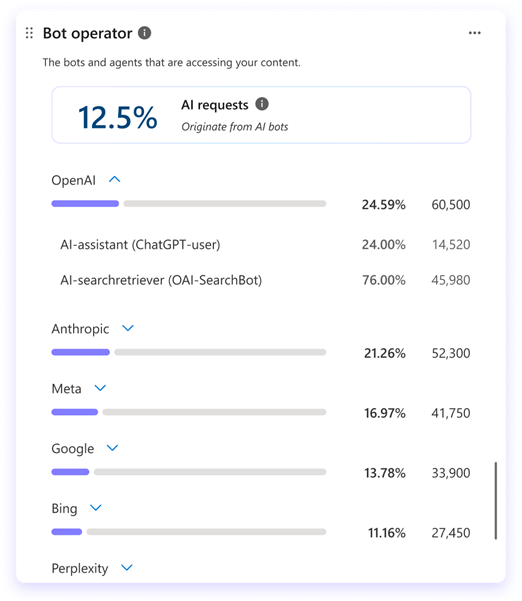
Microsoft’s Clarity team explains Bot Activity, a new AI Visibility dashboard built from server and CDN logs. It shows which bots hit your site, how that share changes, what they are doing (search, data services, developer tools, AI assistants), and which URLs get hammered. The key warning: bot requests do not mean your content was retrieved, grounded, cited, or surfaced in an answer. Use the data to spot low-value crawl patterns, plan infrastructure, and improve bot management. To enable it, sign in, go to Settings > AI Visibility, connect a provider, and open Dashboards > AI Visibility > Bot Activity.
Kevin Indig explains why traffic and revenue no longer move in lockstep and why that shift is permanent. He shows how AI answers, zero-click search, and changing user behavior have broken the old SEO model where rankings equaled growth. The big insight is that SEO now drives influence, not visits. Brands win by shaping buyer perception inside AI tools, not by chasing clicks. He urges marketers to rethink success around authority, clarity, and brand demand rather than sessions.
Eric Gilley says AI search engines judge your page in a blink using the title, URL, and snippet, so vague, curiosity-driven headlines get skipped. Write titles that spell out the question, entity, and problem, front-load meaning, and ignore old length limits. Test longer, denser titles on pages that already rank.
Automattic engineering director James LePage says AI agents will pull from the same search indexes you already optimize for, so the playbook is familiar. Make pages easy to parse: use clear schema, strong semantic markup, and structured markdown. Tighten internal linking so entities connect and authority is obvious. Write for intent, not vibes: lead with the most important answer, then offer clean paths to deeper detail. Treat your site like a briefing, not a document pile.
SEO + GEO Ripples
Danny Goodwin reports that Google’s AI Overviews heavily cite YouTube for health topics, often over medical sources. A study found video dominates citations, even when accuracy suffers.
John Mueller explains why free subdomain hosting hurts SEO. Google struggles to trust sites surrounded by spam, making visibility harder even with good content. His advice is to avoid free hosts, build on a clean domain, and focus first on audience and promotion before expecting search traction results consistently.
Barry Schwartz reports John Mueller says spammy links dropped in blog comments won’t help or hurt your Google rankings. So skip the panic and the disavow. Remember the good ole days when comments were a link building tactic?
AI
Gediminas G. and Hostinger analyze 66.7 billion bot requests across 5+ million websites - AI is becoming a distribution channel, and your crawl policy is now a strategy decision. The main takeaway is to stop treating “bots” as one bucket: decide which bots you want for visibility, which you want to keep out for IP or cost reasons, and enforce it deliberately. Some of data on bots:
Bot traffic baseline: bots are ~30% of global web traffic (Cloudflare Radar), and the dataset aligns with that
Largest bucket: generic scripts/empty/generic bots = 23B requests (34.6% of total)
Search engine bots: 20.3B requests (30.5%); Googlebot averages ~72% site coverage
LLM training/data crawlers: 10.1B requests (15.1%); coverage declines driven by blocking
GPTBot coverage drop: 84% to 12% (clearest signal of training-bot resistance)
SEO/monitoring tools: 6.4B requests (9.7%); AhrefsBot averages ~60% coverage
Assistant-facing crawlers: 4.6B requests (6.9%); OpenAI SearchBot averages ~55.67% coverage
Social/ad bots: 2.2B requests (3.3%); Meta’s link preview crawler averages ~69% coverage but is losing reach
Andy Crestodina explains how to build an AI clone in ChatGPT: start in Create mode, then refine instructions in Configure, pick thinking mode, and add strong starters. Upload your best content as lightweight, organized files with purpose notes. Test, tighten so it cites sources not the web, then share widely.
My Take: My AI clones (plural) are super useful. I have clones that focus specifically on topical maps/authority. Then ones for social, research, coding, and a couple others. They’re all hyper-focused and great to share internally.
There’s a great tip to adapt your source files to include a purpose and description. I also create one-liners that describe each file in the instructions prompt. All the GPTs got better when I did that. There’s a little more work to setting things up initially, but well-worth it on the backend during use.
Leigh McKenzie reports that product carousels in ChatGPT often mirror Google Shopping results, not just web search. To get picked, tune your Merchant Center feed: accurate titles, pricing, availability, reviews, and images. Keep it fresh, match locale settings, and test prompts by decoding shopping fan-out queries in DevTools each month.
OpenAI plans to charge advertisers for ChatGPT ads based on impressions, not clicks, signaling a big shift in how AI ads will be valued. The move suggests lower click expectations, higher brand exposure goals, and rewards visibility over performance as marketers experiment with this new channel. This isn’t unprecedented though, as Barry Schwartz adds: “Truth is, the first Google Ads on Google Search, were handled similarly.”
AI Ripples
Anthropic explains how it redesigned Claude’s constitution to guide how the AI thinks, behaves, and makes decisions. Instead of a rigid rule list, the new version focuses on values, reasoning, and judgment so the model can handle real-world gray areas. The document explains how Claude balances helpfulness, safety, ethics, and compliance, and why understanding intent matters more than blindly following rules.
OpenAI explains how it is rolling out age prediction on ChatGPT consumer plans to better identify accounts that likely belong to users under 18 and automatically apply teen safeguards. The model uses behavioral and account signals like account age, typical activity times, usage patterns over time, and a user’s stated age. When the system flags a likely teen account, it restricts sensitive content such as graphic violence, risky viral challenges, sexual or violent role play, self-harm, and body-shaming dieting content. Parents can also add controls like quiet hours and feature limits in settings.
MARKETING
Amanda Natividad explains how modern marketing wins when you pair emotion with evidence. Her rule: cite market behavior with recent data, and cite human behavior with research that stays relevant. She also breaks “facts” into four jobs: macro-framing, micro-framing, hard proof, and counterpoints so every stat earns its spot.

CONTENT
Wikipedia editors break down the most common signs of AI-written content, from inflated language and vague sourcing to formulaic structure and overused buzzwords. The guide shows how to spot low-quality AI text, why it happens, and what to fix so writing stays accurate, neutral, and genuinely useful for readers everywhere.
SOCIAL MEDIA
Aisha Malik reports YouTube will let creators generate Shorts using their own AI likeness soon, while rolling out stronger controls against impersonation. If you appear on camera, enroll in Likeness Detection, verify with ID and selfie video, then review matches and file privacy or copyright takedowns to protect your brand.
Rand Fishkin explains how social platforms, specifically LinkedIn here, suppress posts with links and how to work around it. He shows why implied links, curiosity driven summaries, and commenting outperform blunt URLs. The takeaway is simple: write posts people want to engage with, let comments do the lifting, and stop fighting algorithms online.
Ashley Belanger reports that TikTok has finalized a “TikTok USDS Joint Venture LLC” meant to keep the app running in the US, while leaving ByteDance with 19.9% and ownership of the algorithm. US investors and board will retrain the recommendation system on US user data, and Oracle will host US data with third party security audits. Lawmakers still question whether this meets the divestiture law and whether influence shifts from Beijing to domestic politics. Expect potential feed volatility during algorithm retraining.
WAYS WE CAN WORK TOGETHER
Floyi - The only AI-powered tool that builds 4-level topical maps. Don’t just plan your content strategy - make it unstoppable.
TopicalMap.com Service - Let us do the heavy lifting. We handle the research, structure, and strategy. You get a custom topical map designed to boost authority and dominate your niche and industry.
Topical Maps Unlocked 2.0 - Unlock the blueprint to ranking success. Master the art of structuring content that search engines (and your audience) love - and watch your rankings soar.
AD
Smarter CX insights for investors and founders

Join The Gladly Brief for insights on how AI, satisfaction, and loyalty intersect to shape modern business outcomes. Subscribe now to see how Gladly is redefining customer experience as an engine of growth—not a cost center.
What Did You Think of This Week's Wave? |
LIKE DIGITAL SURFER?
Find me and others in the Digital Surfer Discord community.
I’d also love to know what you think and if you have any ideas for the newsletter. Reply or email me at [email protected].
I’d also appreciate it if you shared it with fellow digital surfers.
You currently have 0 referrals, only 3 away from receiving LinkedIn Shout-out.
Have a great week taking your SEO and digital marketing to another level!
And don’t forget to drag the Digital Surfer emails to your Primary Inbox 🌊
Reply