- Digital Surfer
- Posts
- I Have 9 Questions for You
I Have 9 Questions for You
Web Page Bloat; Semrush Wins pSEO; 3900 SEO Jobs Reveal X; Don't Let GBP Be Static; Claude Code Leak Learnings; Split-screen YouTube; and Much More!

Yoyao
April 04, 2026 • Est. Learning Time: 12 minutes
FIRST …
Five years. 285 issues. And the last time I asked what you actually think was … a long time ago.
That changes today.
I put together a short survey, less than 2 minutes, to understand what you get from Digital Surfer, what format works best for you and where this newsletter should go next.
No wrong answers. No sales pitch. Just me figuring out how to make this more useful for the people who actually read it.
Thanks for being here!
Yoyao
AD
One brand built 30+ landing pages through Viktor without a single developer.
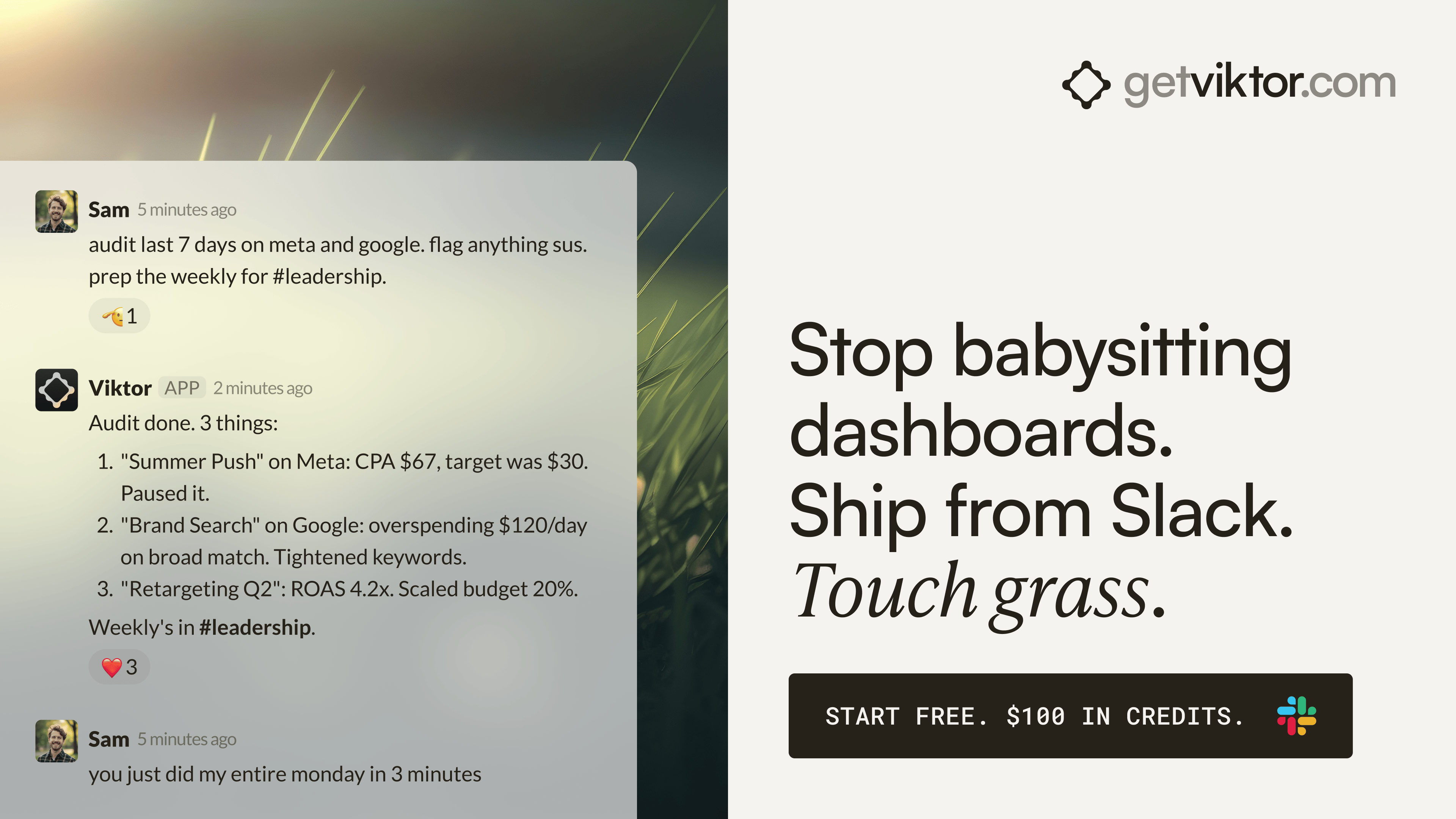
Each page mapped to a specific ad group. All deployed within hours. Viktor wrote the code and shipped every one from a Slack message.
That same team has Viktor monitoring ad accounts across the portfolio and posting performance briefs before the day starts. One colleague. Always on. Across every account.
5,700+ teams. 3,000+ integrations.
SEO + GEO
Gary Illyes and Martin Splitt discuss how median mobile homepages grew from 845 KB in 2015 to 2.3 MB in 2025 and why that still matters despite faster connections. Their main point is that page size is not one simple metric because it depends on raw bytes, compressed transfer size and downstream processing cost, but heavier pages still hurt users on slower networks, chew up more client-side resources and complicate crawling and rendering. Googlebot has a default fetch limit of 15 MB. For Google Search, limit is 2 MB. PDFs are ~64 MB. Read the transcript.
My Take: Reduce bloat. Stay lean. I’ve been using Astro more and more for sites instead of WordPress. I don’t like going into WP now 😅
Philip Elias says Google's first dedicated Discover update rewarded locally relevant content, reduced sensationalism and elevated original, timely coverage from sites with stronger topic-specific expertise. Raptive's analysis across thousands of sites suggests the gains were meaningful, with travel sites up 72%, news sites up 34% and smaller niche sites up 26%, while the common winning patterns were fresh publishing, fewer empty republishes, stronger email engagement and cleaner page experience. Discover moves fast too, more than 70% of page clicks arrived within a day of publication.
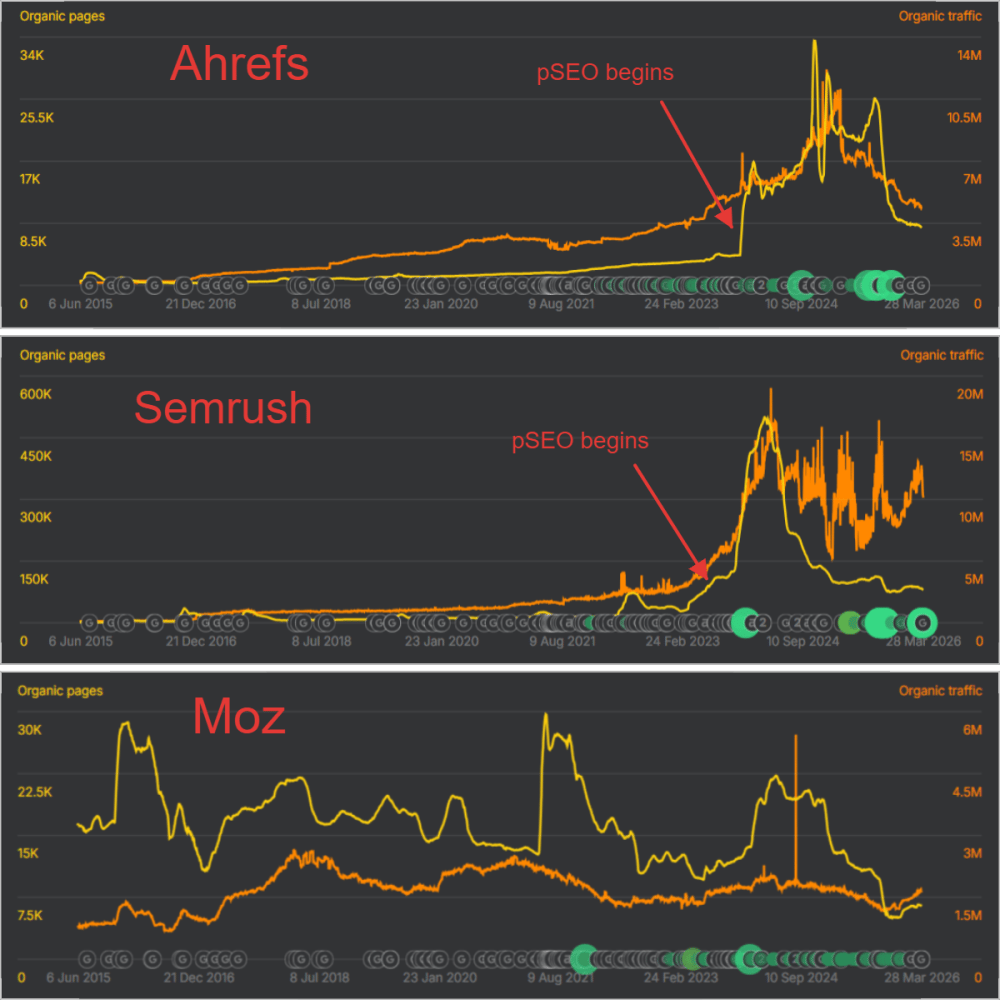
Suman Chatterjee compares Semrush, Ahrefs and Moz over several years of estimated traffic, ranked page counts and top-performing URLs, arguing that these pSEO case studies are often grouped together too loosely. His analysis says Semrush's long rollout of domain profile pages targeting low-difficulty navigational brand queries produced a far more durable outcome than Ahrefs' later push into writing tools and site profile pages, while Moz's steadier editorial growth offers a useful control. The most important point is that the same programmatic SEO label covered very different keyword targets, rollout speeds and page types, which led to very different levels of stickiness after Google's recalibration.
Margarita Loktionova analyzed 3,900 SEO job listings and found that the role is broadening beyond classic rankings into strategy, experimentation and AI-era visibility. The strongest signals are that senior leadership roles account for 59% of listings, median salary for senior SEO roles reached $130,000, project management appears in more than 30% of postings and AI is mentioned in 31% of senior listings. The study also shows how employers are connecting SEO more directly to business outcomes, with growing expectations around cross-functional leadership, experimentation and fluency with AI-driven discovery.
Tom Capper suggests that a lot of prompt tracking is being measured with the wrong mental model, especially when teams obsess over citations, classic rankings and tiny prompt sets. His main point is that AI visibility should be evaluated more like share of mention and presence across a representative prompt universe, not as a one-to-one replacement for keyword rank tracking. The piece also warns against tracking only head terms, since prompt behavior is longer-tail, more variable and often more contextual than traditional search queries.
Tomek Rudzki analyzed 30 million sources across ChatGPT, Google AI Mode, Gemini, Perplexity and AI Overviews to see which domains are cited most often by major AI search systems. The top 10 list was led by Reddit, YouTube, LinkedIn, Wikipedia, Forbes, G2, Yelp, Facebook, Medium and TechRadar, but the more useful insight is how much the platforms diverge once you break them apart. Google's systems leaned harder toward social and community sources like Facebook and Yelp, while ChatGPT favored more editorial sources like Wikipedia, Forbes and TechRadar, and Perplexity gave unusual weight to G2.
My Take: Remember, these types of ‘top domain’ studies depend on the industries that are analyzed. Different industries use different domains. Which platforms matter also depend on your brand and which source your audiences trust most. This is why brand and audience are a required setup in Floyi, and not some bolt-on input field when writing content.
Kevin Indig says that most AI SEO writing advice breaks down at scale because citation patterns differ sharply by vertical, even when people talk about AI search as if one formula fits all. His analysis finds a few stronger signals, including a direct declarative opening, relevant dates and numbers in the intro, and heading structures that match the norms of a given category rather than generic "best practices." Just as important are the negatives: pricing-heavy intros underperform in most non-finance verticals, hedging language weakens citation likelihood, and KG-verified entities do not automatically translate into an advantage.
My Take: Different industries have different content structures, so you can’t reuse the same formatting across all your niches.
Matt G. Southern reports on SE Ranking data from more than 101,000 sites showing that Gemini referral traffic more than doubled between November and January, rising 51% in December and 42% in January after Gemini 3 began rolling out across Google's products. Gemini reportedly sent 29% more visitors than Perplexity globally in January and 41% more in the U.S., even though ChatGPT still accounts for roughly 80% of all AI referral traffic. The important nuance is that this remains a tiny slice of overall web traffic, around 0.24%, but the direction matters because Gemini is tied directly into Google's product surface area and distribution.
My Take: I also added Gemini as a core engine to track in Floyi’s Authority Scorecard (alongside ChatGPT, AI Overviews, AI Mode), because it powers AI Overviews and AI Mode. Even though it’s 3/4 Google, they still provide different answers and sources. Here’s a small sample tracking SERPs and the 4 AI engines for a cluster in Floyi:
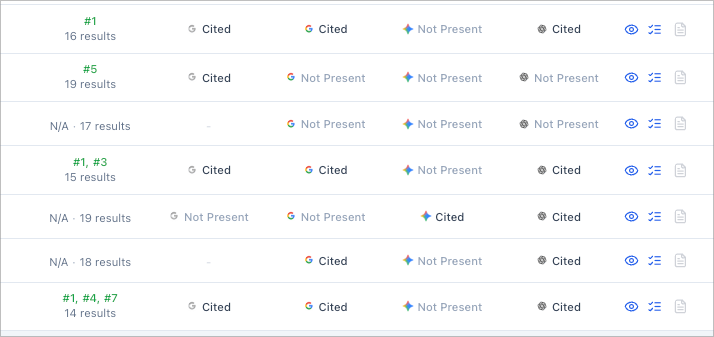
Left to Right - AI Overview, AI Mode, Gemini, ChatGPT
Adam Heitzman finds that Google Business Profiles have shifted from static directory listings into live engagement surfaces where freshness and ongoing activity increasingly shape local visibility. The strongest case in the article is that foundational setup elements like category, proximity and title keywords still matter, but they are now table stakes. Signals such as review cadence, posts, photos, clicks, calls, direction requests and even whether the business is open at search time are climbing in importance. It also connects that shift to a broader product change inside Google, where bookings, menus, inventories, Q&A and real-time updates make GBP feel more like an operating layer than a citation field.
Evan Bailyn studied ChatGPT referral traffic converted between May 2025 and April 2026 using anonymized data from more than 160 client companies, many of which had already invested in GEO and AI-focused conversion funnels. The reported industry averages range from 1.4% in engineering and 1.8% in software development to 7.0% in hotels and resorts, 5.6% in legal services and 4.9% in higher education, suggesting that AI referral traffic can be more commercial in some categories than many teams assume. If you want a broader comparison view, this industry table across ChatGPT, Gemini, Claude and Perplexity helps show how conversion quality shifts by chatbot, not just by sector.
SEO + GEO Ripples
Google is fixing a Search Console bug that has inflated impressions since May 13, 2025, with the correction rolling out over the next few weeks. If impression counts drop soon while clicks stay flat, that is probably reporting cleanup, not a visibility collapse. That’s a long time between the issue first appearing and the start of a fix 😅
John Mueller says core updates can roll out step by step across different systems, which helps explain why volatility often comes in waves instead of one clean reset. The takeaway: during a core update, do not overreact to a single day's movement as the final outcome.
Google moved its crawler IP range JSON files from the old
/search/apis/ipranges/path to the broader/crawling/ipranges/location, with the old URLs staying live for now and redirects planned within six months. It is a small infrastructure update, but anyone verifying crawler traffic, firewall rules or allowlists should update their systems before the legacy path is retired.
AI
David Nachum says Google is folding more generative media into Vids, including 10 free Veo 3.1 video generations per month for anyone with a Google account, custom music powered by Lyria 3 for AI Pro and Ultra users, directable AI avatars, a screen recorder extension and direct YouTube publishing. I created this video from last issue’s cover image:

Made with Google Vids
Anthropic surveyed 80,508 Claude users across 159 countries and 70 languages using a Claude-powered interviewer, then classified the responses into concrete themes about what people want AI to do for them. The top hopes:
Professional excellence: 18.8% wanted AI to handle routine tasks so they could focus on higher-value work.
Personal transformation: 13.7% saw AI as support for emotional wellbeing, self-understanding, or behavior change.
Life management: 13.5% wanted help with schedules, organization and reducing mental load.
Time freedom: 11.1% wanted AI to give them back time for family, rest and hobbies.
Financial independence: 9.7% hoped AI could help build income, security or business leverage.
Entrepreneurship: 8.7%
Learning and growth: 8.4%
Creative expression: 5.6%
Louis Columbus reports that Anthropic accidentally shipped a source map in Claude Code 2.1.88, exposing 512,000 lines of readable TypeScript across 1,906 files, including its permission model, bash validators, unreleased feature flags and internal tooling logic. The most important part is not the leak volume itself but what it revealed about agent security: context compaction rules, shell parsing gaps and validator chains that researchers say could be combined into practical attack paths. Ars Technica then showed how Anthropic tried to contain the spread through a DMCA takedown that unintentionally swept up legitimate GitHub forks of its public repo before the company narrowed and reversed the action. Taken together, the story is both a security incident and a live case study in how hard it is to lock down agent infrastructure once operational details leak into the open.
AI Ripples
Google launched Gemma 4, its new open model family with four sizes, up to 256K context, multimodal support and native agent features like function calling and structured JSON output.
Google introduced Veo 3.1 Lite, a lower-cost video generation model for the Gemini API that comes in at less than half the price of Veo 3.1 Fast while keeping the same speed. $0.05 per second for 720p and $0.08 per second for 1080p. Video generation is moving down the cost curve fast enough that more product teams can start treating it like a usable feature layer, not just an expensive demo.
OpenAI added pay-as-you-go Codex-only seats for ChatGPT Business and Enterprise teams, removing fixed seat fees and billing usage on token consumption instead. Coding agents are moving from bundled perk to measured infrastructure spend, which makes experimentation easier for small teams and adoption easier to justify to finance.
MARKETING
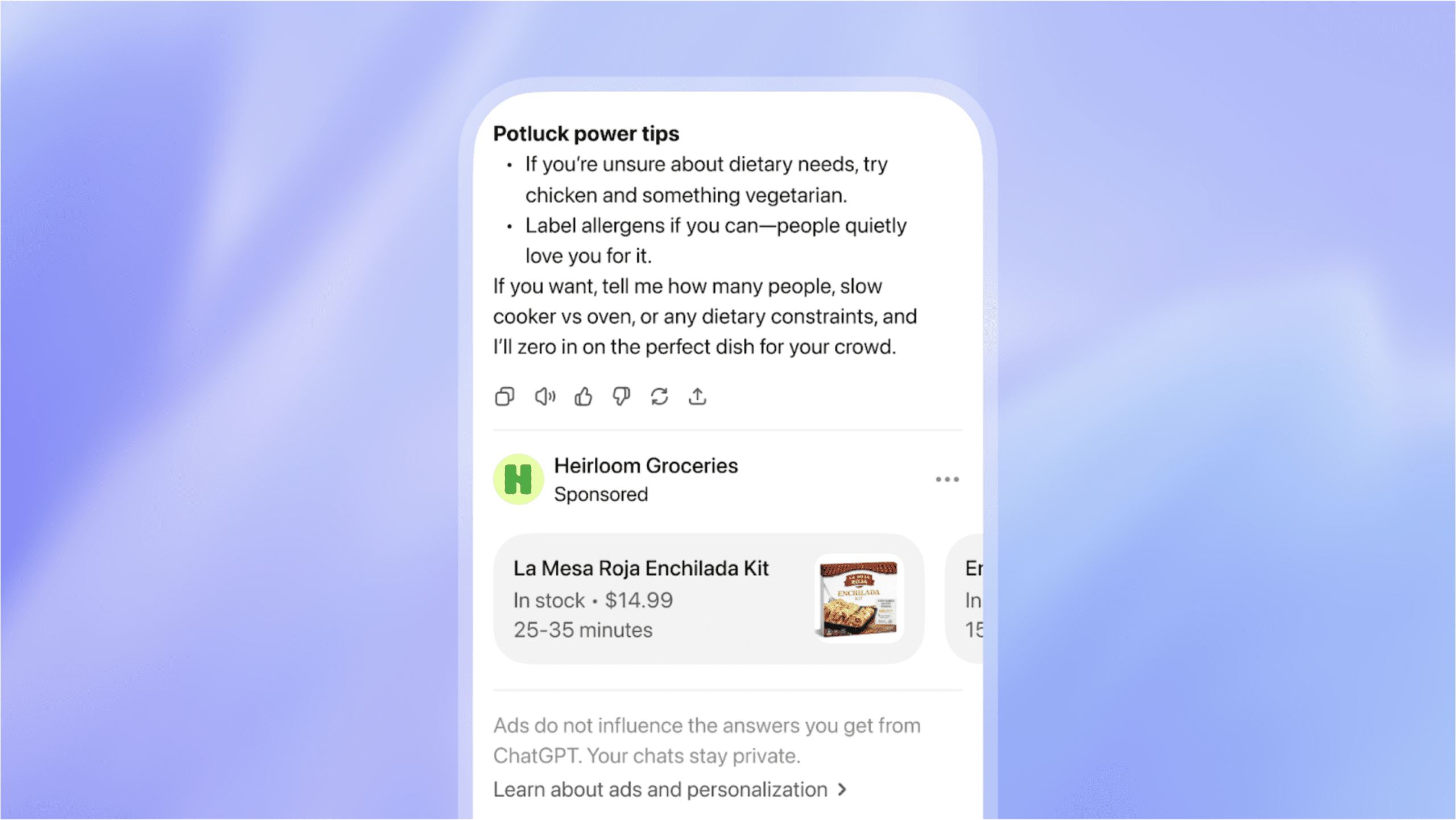
Ross Simmonds says that LLM ads could outgrow search and social because conversational prompts reveal a denser layer of declared intent than traditional queries or social behavior ever could. His core claim is that a prompt like "I need a CRM for a 15-person B2B sales team with Slack integration" contains far more commercial context than a standard search, which could make sponsored recommendations feel less like interruptions and more like relevant answers.
CONTENT
Margarita Loktionova shares the results from an analysis of 20,000 keywords and 42,000 blog posts, then paired that with survey data from SEO teams to test how AI-written content performs in search. The headline finding is that pages classified as human-written dominated the top spot at roughly 80%, while purely AI-generated content appeared there only about 10% of the time, even though 72% of surveyed SEOs said AI content ranks at least as well as human-written work. The nuance is that AI holds up better across page-one rankings generally, but the gap gets much sharper near position one, where originality and editorial judgment appear to matter most. That makes this less an anti-AI argument and more a reminder that AI helps with speed and process, but standout rankings still seem to depend on strong human input, expertise and differentiation.
Chima Mmeje says that the real problem with AI content is not the tool itself but the flood of bland, strategy-free output that mirrors whatever is already in the SERP. She makes the case that AI is useful for execution, editing and speed, but weak at framing, original thinking and building content that deserves attention in an environment where AI Overviews are already stripping away clicks from generic informational pages. It also pushes marketers toward a fuller-funnel mindset, where first-person perspective, actionable takeaways, repurposing and platform-specific distribution matter more than publishing one more interchangeable article.
My Take: Both of these sources show that if content does not give people something they cannot get directly from the SERP or an LLM answer, it is becoming harder to justify its existence. The issue is not whether AI touched the draft. It is whether the final piece has any real point of view, utility or affinity-building value.
SOCIAL MEDIA
Andrew Hutchinson reports that Snapchat is opening Creator Subscriptions beyond Snap Stars to all eligible creators with Creator Accounts, giving more users access to subscriber-only Stories, direct Snaps and priority replies. Snapchat is widening the middle class of creators it can incentivize to post consistently inside the app instead of reserving premium tools for a narrow top tier. Snapchat wants more creators building paid communities before those relationships migrate elsewhere.
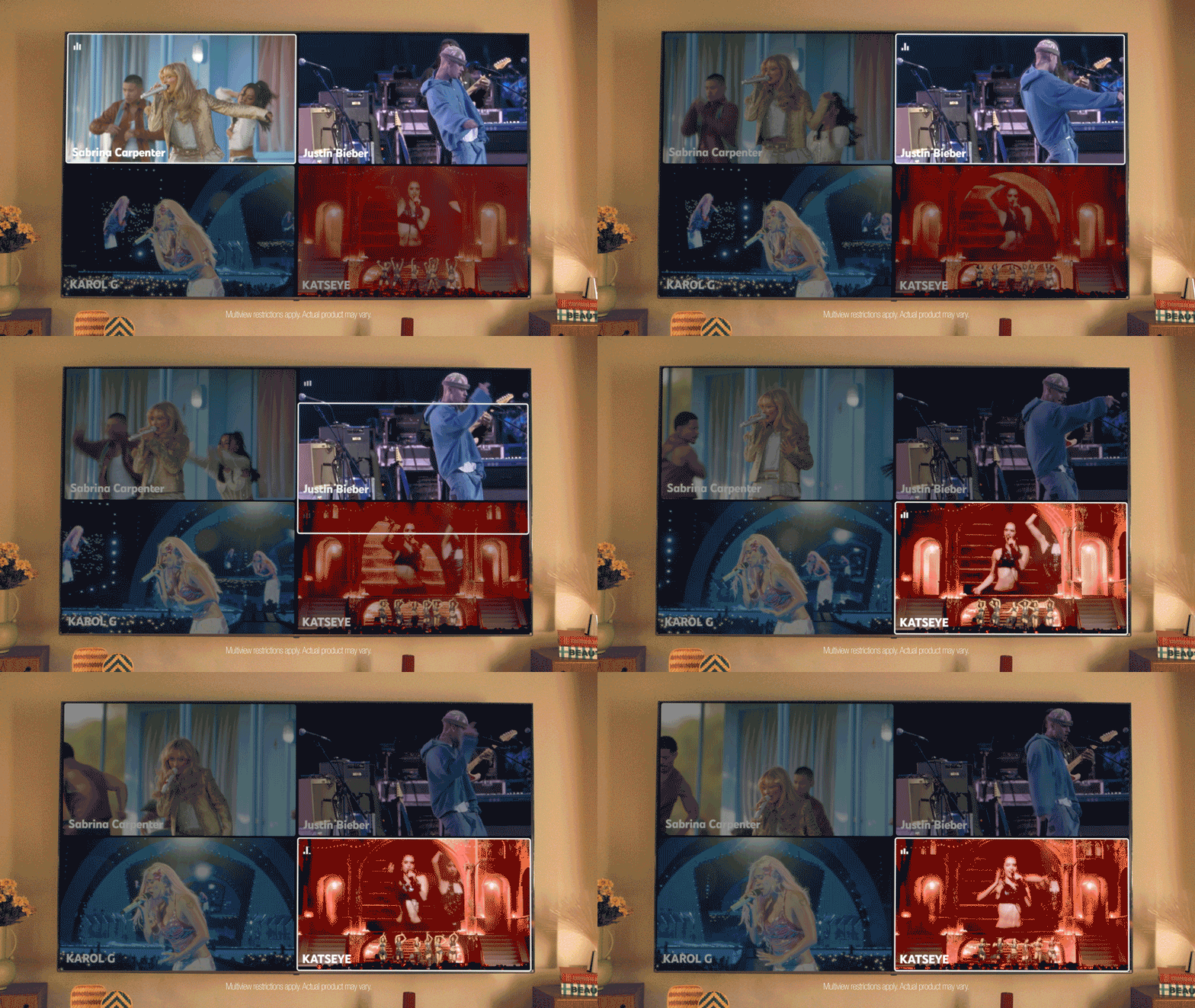
Ali Rivera frames this as a festival viewing guide, but the more interesting story is the product rollout underneath it: YouTube is livestreaming seven stages, adding 4K for three major stages, launching a 24/7 Coachella TV feed and pushing its living room Multiview experience harder by letting fans watch up to four stages at once. Multiview changes the viewing model from picking one stream to managing several in parallel, which is a much stronger pitch for event coverage, sports and creator programming that competes for attention at the same time. The post also layers in creator-led "Watch With" sessions, direct merch buying through YouTube Shopping and app-based schedule planning, turning the event into a bundled demo of discovery, commerce and second-screen engagement.
Reddit is expanding Reddit Pro's publisher tools into public beta, letting any publisher verify a domain and access the Links tab, RSS imports, AI-powered community recommendations, community snapshots and internal notes. The company says publishers testing the tools since September saw median post views rise 46%, profile views nearly double and comments on publisher stories increase 48% versus their pre-tool baseline. Reddit is moving from being an unpredictable referral source to becoming a more structured publishing and distribution layer for media brands that want to seed stories directly into relevant communities.
Social Ripples
LinkedIn will require livestreams to be scheduled ahead of time starting June 22, ending spontaneous LinkedIn Live broadcasts even though users can still set events up just minutes in advance. The move looks less like a product cut and more like a push toward better viewership, more event promotion and fewer low-attention live streams.
Reddit is deprecating r/all after testing its removal earlier this year, pushing users toward r/popular and the personalized Home feed instead. The shift matters because r/all was one of the platform's last major surfaces for broad, less-filtered content discovery, while the replacement feeds give Reddit more algorithmic control over what users see.
TOOLS AND RESOURCES
Suganthan Mohanadasan explains how to connect Claude to Google Search Console through a free open source MCP server, turning GSC into a conversational analysis layer instead of a dashboard you have to click through manually. The setup uses a Google Cloud project, the Search Console API, a service account, and Claude Desktop or Claude Code, with the whole workflow running locally so data does not pass through a third-party server. He also outlines 10 built-in analysis use cases, including quick wins, content gaps, traffic drops, CTR opportunities, cannibalization checks, content decay, and URL inspection.
This is for developers and the integration risk. Google Account users in the U.S. can now change their Gmail username while keeping the same account, inbox and data, with the old address retained as an alias. Apps that identify Sign in with Google users by email instead of subject ID can create duplicate accounts or lose continuity when a revoked OAuth grant starts returning the new address. Google is effectively using this rollout to push developers harder toward subject ID as the stable primary identifier, with email recovery and account-update flows as backup safeguards.
Matt Taylor and Matt Kane introduce EmDash, a new open source CMS from Cloudflare that is built with TypeScript, powered by Astro, and designed to replace WordPress's plugin model with sandboxed Worker isolates. Their core argument is that WordPress plugin security is structurally broken because plugins get broad access to the filesystem and database, while EmDash forces every plugin to declare scoped capabilities up front and run inside an isolated environment. That shifts plugin trust from an all-or-nothing install decision to a more explicit permission model, which is a meaningful architectural change for anyone running content sites with lots of third-party extensions.
Here’s Matt Mullenweg’s response (the 3rd Matt and Automattic’s Founder). He had originally told them to keep “WordPress” out of their mouths, but he’s since“removed “out of your mouth” sentence” because it was "too spicy for Western palates.”
My Take: Should you immediately go change all of your Astro or WP sites? I’m definitely not. It’s a new CMS and just launched. It’s not stable enough for production for me. There’d be too many little bugs that I’d be frustrated with. But if you like testing out new tools, they have a Playground to try out the dashboard.
WAYS WE CAN WORK TOGETHER
Floyi - Build Topical Authority that wins in Google and AI Search. Don’t just plan your content strategy - make it unstoppable.
TopicalMap.com Service - Let us do the heavy lifting. We handle the research, structure, and strategy. You get a custom topical map designed to boost authority and dominate your niche and industry.
Topical Maps Unlocked 2.0 - Unlock the blueprint to ranking success. Master the art of structuring content that search engines (and your audience) love - and watch your rankings soar.
AD
Want to get the most out of ChatGPT?
ChatGPT is a superpower if you know how to use it correctly.
Discover how HubSpot's guide to AI can elevate both your productivity and creativity to get more things done.
Learn to automate tasks, enhance decision-making, and foster innovation with the power of AI.
What Did You Think of This Week's Wave? |
LIKE DIGITAL SURFER?
Find me and others in the Digital Surfer Discord community.
I’d also love to know what you think and if you have any ideas for the newsletter. Reply or email me at [email protected].
I’d also appreciate it if you shared it with fellow digital surfers.
You currently have 0 referrals, only 3 away from receiving LinkedIn Shout-out.
Have a great week taking your SEO and digital marketing to another level!
And don’t forget to drag the Digital Surfer emails to your Primary Inbox 🌊
Reply