- Digital Surfer
- Posts
- Your Keyword Report is Lying to You
Your Keyword Report is Lying to You
Topical Ownership; SEO Hackathon; Google's Big Releases; Domain Age Study; $1.3M OpenAI Tokens; LinkedIn Suppresses AI Content; and Much More!

Yoyao
May 23, 2026 • Est. Learning Time: 11 minutes
Sponsored by

FIRST …
Most SEO tools will show you where your keywords rank and what prompts you're being cited in.
That sounds useful until you realize a list of disconnected keywords tells you nothing about whether you actually own a topic.
Ranking for 40 keywords across a niche is not the same as owning it. You can have a perfectly healthy-looking keyword report and still be invisible to AI answer engines on the topics that matter most to your brand. You can be generating impressions on dozens of queries and still have zero topical ownership.
The difference is in how you're measuring.
If you're working from a sitemap and a keyword list, you're measuring traffic.
If you're working from a topical map, you're measuring authority.

Mentions (light purple), Citations (dark purple) and not present (yellow)
I’m excited to share Floyi's upcoming Visual Authority Map inside the Organic Audit. Every node is a topic from your topical map.
Use the Color by dropdown to switch between AI search presence across AI Overviews, AI Mode, Gemini and ChatGPT, or flip to clicks, impressions and rankings from Google Search Console. Same map. Different lens.
Another view shows your Google Search Console data: clicks, impressions and rankings mapped directly to your topical map.
You're not looking at a keyword report. You're looking at your authority structure, and you can finally see where you own your topics and where you're absent entirely.
That's what topical ownership is about. Not more posts. Not more keywords. Owning the right categories, clearly, in both organic search and AI search simultaneously.

AD
The World's Biggest Dev Event Hits Silicon Valley

WeAreDevelopers World Congress comes to San José, CA — September 23–25, 2026. 10,000+ developers, 500+ speakers, and the full software development lifecycle under one roof, in the heart of Silicon Valley.
Kelsey Hightower. Thomas Dohmke (fmr. CEO, GitHub). Christine Yen (CEO, Honeycomb). Mathias Biilmann (CEO, Netlify). Olivier Pomel (CEO, Datadog). The people actually building the tools you use every day — all on one stage.
AI, cloud, DevOps, security, architecture, and everything real builders ship with. Workshops, masterclasses, and the official congress party.
FROM ME
Many SaaS blogs are not losing because AI changed search. They are losing because Google, buyers, and AI answer systems cannot clearly connect the brand to a specific category, problem, workflow, or buying situation. A SaaS site needs to show what the company owns, who it helps, what workflows it improves, and why the product belongs in the recommendation set.
I see topical ownership as the point where a SaaS blog stops chasing individual keywords and starts becoming the clearest source on a specific problem category. You want prospects, search engines, and AI answer engines to easily tell what the product is qualified to help with. The process: define the authority anchor, define the topical scope, then build the topical map that turns scope into pages, links, proof, and priorities.
This video explains why content strategy breaks when teams start with keyword lists instead of brand foundation. Coffee brands like Nescafé, Starbucks, and Blue Bottle show how the same topic, “how to brew coffee at home,” should produce different angles, language, examples, and depth depending on the brand. The framework starts with the brand, then audience, then topics, then content, so briefs inherit positioning, personas, terminology rules, voice, visual style, and source knowledge before drafts are written.
A keyword-first approach is the mistake I see in topical maps all the time. It can look clean in a spreadsheet, but still produce content that any competitor could publish. The better workflow is to make brand and buyer context filter the topics before briefs are created, then use the four-question test on existing content: does the piece express a specific position, serve a real persona, match the voice guide, and connect to the map?
Internet Marketing Gold is running SEO Reborn: Hackathon 2026, a free multi-week SEO testing competition for solo practitioners and teams. Participants choose an AI search optimization, on-page optimization, or off-page optimization track, run live experiments from May 25 to June 22, then submit findings by June 23 for a June 25 winners event. Per-track winners receive $2,500, six months of IMG membership, and YouTube feature promotion.
I'm also judging the hackathon alongside Kyle Roof, Helene Jelenc, Yash Singh, and Joy Hawkins, so I'll be looking for clear methodology, measurable results, and findings that other SEOs can actually apply. The AI search track is especially worth watching because GEO advice needs more public test data, not more recycled checklists.
Sign up ends in 24 hours!
SEO + GEO

Google May 2026 Core Update is out.
Elizabeth Reid says Google is moving AI Mode from an answer surface into a task layer for Search, with Gemini 3.5 Flash as the default model, a redesigned AI-powered Search box, background information agents, agentic booking, generative UI, custom mini apps, and wider Personal Intelligence. Google says AI Mode has passed one billion monthly users, AI Mode queries have more than doubled every quarter since launch, and Search queries hit an all-time high last quarter.
The accompanying AI Mode U.S. Insights PDF adds useful behavior data: the average AI Mode query is triple the length of a traditional Search query, follow-up queries have increased by more than 40% per month on average in the U.S., and more than one in six AI Mode searches are non-text.
A fun query. Russell Brandom reports that Google's AI-heavy Search interface now breaks down on a basic query for the word “disregard.” The Merriam-Webster result still exists, but users have to scroll past a large empty AI response area before reaching it, while Bing returns a more useful dictionary-style result.
Google's Keyword Team says Gemini-powered ads are coming deeper into AI Mode and Search, including Conversational Discovery ads, Highlighted Answers, AI-powered Shopping ads, Business Agent for Leads, and expanded Direct Offers. The new formats let ads answer specific research questions, appear inside recommendation lists, explain why a product fits a query, and turn static lead forms into branded chat agents. Google cites an Ipsos study of 13,189 online shoppers where 75% of people reported making faster, more confident decisions using AI Mode in Search.

Bing says its new Image Search experience uses AI to label, organize, and summarize image results into clear groups instead of showing users a flat grid. The opt-in experience starts in the U.S. on desktop and mobile web, with a “New Version” toggle inside Bing Images and no sign-in required.
My Take: This is a small product update with a bigger search implication. Image search is becoming another answer surface, where the system groups, labels, and explains the web before the user clicks. For brands, visual assets need the same discipline as written content: descriptive context, source clarity, and enough surrounding information for an AI system to place the image in the right category.

The Developer documentation in Lighthouse on llms.txt files says “Without [llms.txt], agents may spend more time crawling the site to understand its high-level structure and primary content.”
Google Search Central’s post last week on mythbusting generative AI search says “You don’t need to create [llms.txt] to appear in generative AI search.
My Take: I’ve said before it doesn’t hurt to create one and it’s easy to do with AI and plugins. Whether or not the agents visiting your site uses your llms.txt is a moot point. The fact that it’s not using it now doesn’t mean it won’t ever use it. With Google saying “agentic” with every announcement, I’d put much more weight in what their Lighthouse docs say - especially with their Agentic browsing audits covering WebMCP, llms.txt, accessibility, and Cumulative Layout Shift (CLS).
Mike King says Google’s guidance on optimizing for generative AI search is useful but incomplete because it frames AI search as “still SEO” from Google’s own point of view. He contrasts Google’s advice with Bing’s public writing on grounding, GEO tooling, and the shift from documents to groundable information, then pushes back on Google’s dismissal of llms.txt, chunking, and AI-specific writing. His core point is that SEO fundamentals still matter, but they do not cover ChatGPT, Claude, Perplexity, Copilot, Gemini, and the wider network of AI systems that retrieve, synthesize, and cite content differently.
Mike King explains why the simple RAG model of query, retriever, chunks, LLM, and answer is no longer enough to describe AI search. He says major AI search systems now use agentic RAG, where the system plans sub-queries, routes between tools, retrieves in multiple passes, checks its own draft, and only then synthesizes the final answer. He translates that into six content shifts: win across sub-retrievals, write atomic passages, build bridge entities, handle contradictions, create tool-callable assets, and keep freshness signals visible.
Garrett Sussman shares results from testing Google Personal Intelligence across 1,922 AI Mode responses that found seeded brands were 46 percentage points more likely to appear versus a control account. In the Personal Intelligence account, seeded brand appearance rose from 23.9% to 66.8%, top-3 placement gained 23.1 points, and top-10 placement gained 42.8 points. Gmail was the strongest tested source: brands introduced through email appeared in 53.6% of responses, while photo-seeded brands appeared in 10.5%.
My Take: Now imagine you’re managing your brand’s ads. How badly do you want to be able to target all the people that have emails with mentions of your brand? This isn’t just targeting people who have browsed to certain pages anymore. This is in the inbox, where it’s a lot more personal. Brands are 🤤 (drooling) for ad space.
Yulia Deda shares an analysis of 100,000 SERPs and found domains under two years old appeared in only 2.03% of top-10 results and 1.42% of top-3 results. The study says domain age is not the direct cause. Older domains tend to rank because they have stronger authority signals.
Old domains dominate: 57.15% of top-10 domains are 15+ years old, rising to 62.61% in the top 3.
The median gap is large: The median top-10 domain is 17.3 years old, while the median top-3 domain is 19.6 years old.
Authority explains the gap: A typical 15+ year old top-10 domain has 10,875 median backlinks, 1,204 referring domains, and Domain Trust of 72.
Young domains need focus: A young domain example, story.cv, ranked in the top 10 for 75 keywords, with nearly half tied to one career-change resume cluster.
Aleyda Solis says AI search does not replace traditional SEO, but it changes what teams need to measure and fix. Rankings and clicks still matter, yet AI answers can retrieve, compare, cite, recommend, misstate, or ignore a brand before the user reaches a site. She frames AI visibility around ten brand traits: accessible, useful, extractable, recognizable, consistent, corroborated, credible, differentiated, fresh, and transactable.
Lily Ray monitored more than 220 websites publicly listed as customers of AI content platforms and found a recurring boom-bust pattern. Across the group, 54% lost 30% or more of peak organic traffic, 39% lost 50% or more, and 22% lost 75% or more. The risky patterns were familiar: comparison pages at scale, “what is” glossaries, best-for listicles, competitor alternative pages, programmatic location and language pages, FAQ farms, and off-topic content published in volume.
My Take: This is the warning I keep coming back to with AI content. The danger is not AI helping with research, briefs, structure, or internal knowledge. The danger is using AI to manufacture pages that exist for rankings or citations instead of a real customer need. If a competitor can publish the same page tomorrow with the same prompt, it is not a moat. I recently shared a video on how Floyi approaches content so no two brands will ever produce the same article, even if it’s on the same topic.
Heather Ferris recaps the first day of SEO Week 2026, where speakers focused on the infrastructure behind modern search: indexes, embeddings, knowledge graphs, rerankers, passage retrieval, agentic systems, and measurement. Bing’s Krishna Madhavan said AI systems evaluate content through trust, eligibility, safety, grounding, and retrieval layers before it reaches a user. Other sessions covered knowledge graphs, internal tool building, AI-assisted coding guardrails, financial-impact measurement, hybrid search scoring, entropy reduction, passage-level retrieval, and systems-level AI search. There’s also a form to get all of the presenter decks.
Barry Schwartz reports that OpenAI’s offline web search documentation confirms ChatGPT can use indexed and cached web content instead of live web search for eligible workspaces. The help page says cached results may be outdated, incomplete, inaccurate, or include malicious instructions, and it may not show the exact time a page was indexed or cached. If a user asks for a specific URL, offline web search can use it only when the page is already available in OpenAI’s index or cache.
My Take: It was only a matter of time. Freshness and crawl access are no longer Google-only problems. If ChatGPT is answering from its own cached web layer, then publishing, updating, and making content easy to recrawl becomes part of AI visibility.
Adam Heitzman says SEO teams waste time when they treat every audit warning as equal. He notes that tool scores are not ranking signals and recommends triaging work by impact, reach, effort, and risk before it earns roadmap space. The highest-return work is usually defending page-one performers, improving pages ranking in positions 11 to 30, building or expanding topic clusters, strengthening internal links, and fixing technical blockers that actually limit crawlability, indexation, UX, or revenue.
AI
Luke James reports that OpenClaw creator Peter Steinberger posted a 30-day OpenAI API bill showing $1,305,088.81 in spend across 603 billion tokens and 7.6 million requests. The usage came from roughly 100 Codex agents run by a three-person team working on the open-source OpenClaw project, with OpenAI covering the cost because Steinberger joined the company in February. The agents review pull requests, scan commits for security issues, deduplicate GitHub issues, write fixes, monitor benchmarks, and even generate PRs from meeting discussions. Steinberger said the bill reflects Codex Fast Mode pricing, and disabling it would bring the raw API cost closer to $300,000.
My Take: 🤯
The Gemini app now reaches more than 900 million monthly users across 230 countries and more than 70 languages, up from 400 million at Google I/O last year. Google is adding Gemini 3.5 Flash, a redesigned Neural Expressive interface, Gemini Omni, Daily Brief, Gemini Spark, and a macOS app that will later connect Spark to local files and desktop workflows. Spark runs in the cloud, connects to tools like Gmail, Docs, and Slides, and can handle recurring tasks, inbox monitoring, meeting-note synthesis, and project kickoff drafts under user direction.
Gemini Omni Flash is Google's new model for creating and editing video from text, image, video, and audio inputs. Omni can edit footage through multi-turn prompts, keep characters and scene context consistent, apply style or motion references, create videos with a user's own digital avatar, and bring generated video into Gemini, Google Flow, and YouTube Shorts. Google says every Omni video includes SynthID watermarking, with verification available through Gemini, Chrome, and Search.

AI Ripples
Google Adds $100 and $200 AI Ultra Plans: Google launched a $100/month AI Ultra plan and cut its top AI Ultra plan from $250 to $200/month. This matches the premium pricing tier used by OpenAI and Claude, but Google's edge is integration: Search, Gmail, Calendar, Docs, Photos, YouTube, Android, Chrome, storage, and agents all sit closer to daily life. That’s a pretty nice edge if you use anything Google (which we all do, right?).
SpaceX Files IPO Prospectus: SpaceX filed to list on Nasdaq and Nasdaq Texas under the ticker SPCX. The filing shows 2025 revenue of $18.7 billion, a $4.27 billion net loss in Q1, Starlink generating more than two-thirds of revenue, and SpaceX now owning X and Grok after acquiring xAI in February.
OpenAI Prepares Confidential IPO Filing: OpenAI is preparing to confidentially file a draft IPO prospectus. CNBC says OpenAI is valued at more than $850 billion by private investors and has raised more than $180 billion, while Anthropic is reportedly in talks at a $900 billion valuation.
SOCIAL MEDIA
Alex Weprin reports that X is launching Creator Connect, an AI-powered ad product that matches brands with relevant creators based on campaign goals, real-time trends, and audience interests. X global head of content partnerships Mitchell Smith says the product is aimed at rising and niche creators, not just the “upper 1 percent,” and can identify lookalike creators with similar voices or creation styles. X has already tested the system for a premium laptop company seeking tech creators who were also F1 fans, plus a major movie studio campaign for a horror film.
Laura Lorenzetti says LinkedIn is reducing distribution for low-effort AI-generated posts and comments that look polished but lack perspective, context, or expertise. LinkedIn says its systems, built with editorial input, correctly identify generic content 94% of the time in early testing. The platform is also expanding verification filters across profile views, job applications, comments, and feed conversations, with more than 100 million verified members now available for filtering.
TOOLS AND RESOURCES
Camille Cunningham breaks down WordPress 7.0, which shipped on May 20 with a refreshed admin interface, visual revisions, Breadcrumbs and Icon blocks, better responsive design controls, smarter pattern editing, AI connector settings, and a new plugin-list filter. The AI connector section does not add built-in AI tools, but it gives site owners and developers one central place to connect external providers like Claude, Gemini, and OpenAI. WordPress 7.0 also raises the minimum PHP version to 7.4, while real-time collaboration has been delayed to a future release.
WAYS WE CAN WORK TOGETHER
Floyi - Build Topical Authority that wins in Google and AI Search. Don’t just plan your content strategy - make it unstoppable.
TopicalMap.com Service - Let us do the heavy lifting. We handle the research, structure, and strategy. You get a custom topical map designed to boost authority and dominate your niche and industry.
Topical Maps Unlocked 2.0 - Unlock the blueprint to ranking success. Master the art of structuring content that search engines (and your audience) love - and watch your rankings soar.
AD
Attio - the AI CRM for modern businesses.
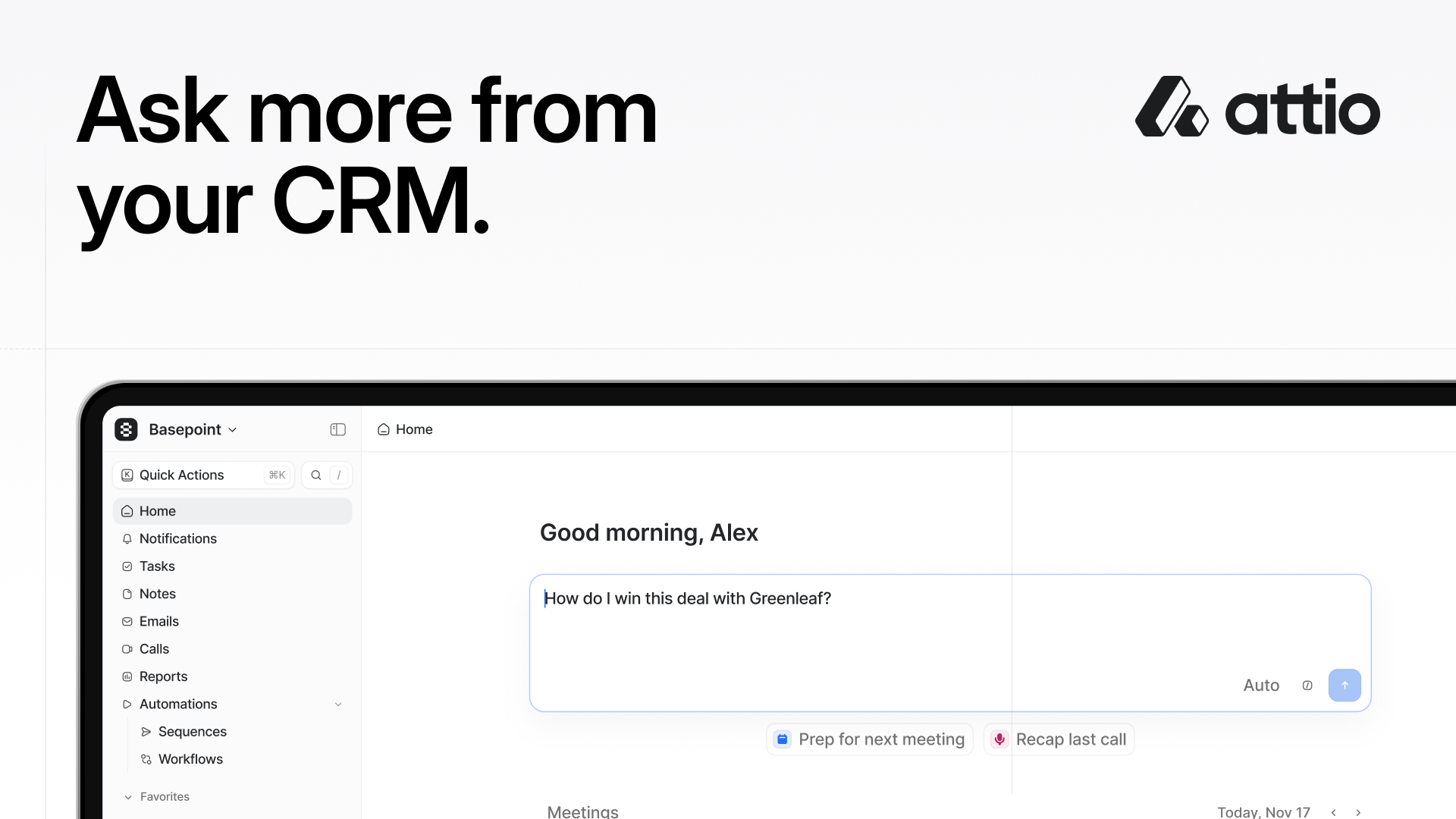
Attio is the AI CRM that keeps you ten steps ahead.
Ask Attio anything. Where should I focus? What deals are at risk? Search, update, and create across your customer data.
Ask more from CRM. Ask Attio.
LIKE DIGITAL SURFER?
Find me and others in the Digital Surfer Discord community.
I’d also love to know what you think and if you have any ideas for the newsletter. Reply or email me at [email protected].
I’d also appreciate it if you shared it with fellow digital surfers.
You currently have 0 referrals, only 3 away from receiving LinkedIn Shout-out.
Have a great week taking your SEO and digital marketing to another level!
And don’t forget to drag the Digital Surfer emails to your Primary Inbox 🌊
Reply