- Digital Surfer
- Posts
- Don't Trust It Until You Test It
Don't Trust It Until You Test It
Wave 297 - SEO Testing; Revisiting 100 Blogs; Why Content Isn't Ranking; Domain Migration Recoveries; OKF Brains; Deindexing Reports Continue; and Much More!

Yoyao
June 27, 2026 • Est. Learning Time: 9 minutes
Sponsored by

FIRST …
Don’t trust it until you test it.
That’s the SEO philosophy I keep coming back to.
This week I jumped on the IMG podcast with Kaitlin McMichael to talk SEO testing. Amanda Pimenta moderated. Kaitlin runs tests at Amazon Web Services (AWS). I run them on small sites where one stray variable can throw off the whole test.
Different worlds. Same rule: don’t trust it until you test it.
The thing that stayed with me from that hour is how many SEO claims go unquestioned until someone tests them on their own site, vertical, or niche. What's true for one isn't automatically true for yours.
One of my favorites: the assumption that a page has to be indexed in Google to show up in an AI model. A lot of people repeat it. It's not true, and the test proves it.
So the next time someone hands you an SEO rule, take it with a grain of salt. Then test it yourself.
Don’t just accept it.
Don’t just dismiss it.
Just test it.
And I can’t believe we’re almost at Wave 300 of the newsletter!

Read the conditions first. Then paddle out.
AD
Done-For-You TikTok Shop Scaling

Zainith Agency is a boutique digital marketing agency exclusively focused on TikTok Shop.
They’ve worked with brands like Momofuku, Obvi, First Day, Ice Shaker by NFL Star Chris Gronkowski, and more to set-up and scale TikTok Shop to over $15 million in sales last Q4.
For a limited time, they’re offering a free 30-minute consultation/audit for brands doing at least $1 million/year in sales. Spots are limited. Claim yours below.
SEO + GEO
Google June 2026 Spam Update Released on June 25th

Daniel Stanica tracks 100 once-successful blogs from April 2022 to April 2026 and shows how exposed the old blog-income model became once Google updates and AI answers hit summarizable content.
Median collapse: The typical site lost 85% of its Google search traffic, and two-thirds of the cohort lost more than half.
Hard failures: 55 of the 100 blogs were gutted, wiped out, or dead. Twenty sites lost 99% or more, and 12 now show zero organic visits.
Averages hide the damage: Total monthly traffic across all 100 sites fell from roughly 17.8 million visits to 12 million, but after removing three large food sites, the other 97 blogs fell 63%, from about 11 million monthly visits to 4 million.
Niche split: Parenting rose 108% and DIY/crafts rose 2% at the median, while travel fell 74%, lifestyle fell 90%, health fell 93%, fashion fell 95%, and finance fell 99%.
Survivor pattern: Only 21 of 100 blogs grew organic traffic. He says every survivor had at least two of four traits: firsthand experience, an owned audience, a real product, and brand demand people searched for directly.

Kyle Roof reports on 10,937 PageOptimizer Pro audits and finds the median page scored 33.1 out of 100, with 46.8% below 25. The biggest misses were not writing quality: 99% lacked at least one recommended schema type, 99.4% missed semantic terms, 79.8% missed trust and entity signals, and most pages also missed exact-keyword H1 or title placement. Key insights are that Google and AI systems still need machine-readable proof: schema, entity clarity, semantic coverage, structure, and competitor-matched content depth.
Kaitlin McMichael explains why SEO A/B testing cannot be copied straight into AEO. Traditional SEO tests randomize URLs and measure organic traffic, but answer engines create more zero-click visibility, weaker referral signals, and measurement gaps across ChatGPT, Perplexity, Copilot, Claude, Gemini, AI Mode, and AI Overviews. Her framing pushes teams to define reliable AEO metrics before testing page changes, because traffic alone misses whether a brand is being cited, surfaced, or trusted in answer outputs.
My Take: Kaitlin was on the IMG podcast with me and she’s someone you definitely want to read/watch/listen to.
Dan Taylor analyzes 1,052 domain migrations and finds only about one in four recover organic traffic within 90 days. SALT defined recovery as the new domain reaching or exceeding the old domain's six-month pre-migration traffic baseline, not just getting pages indexed again. The median recovery time was 304 days, the mean was 489 days, and 42% of migrations took more than 12 months.
Ryan Law analyzes anonymized Google Search Console data from 422,421 websites and shows why “average traffic” is the wrong benchmark for most SEO plans. Median monthly Google clicks range from 11 for DR 0-10 sites to 126,364 for DR 90-100 sites, and from 18 for sites with under 10 indexed pages to 244,772 for sites with 5,000+ pages. The useful comparison is not against a publisher or industry mean. It is against sites with similar authority and index size.
Suganthan Mohanadasan shows what ChatGPT exposes in browser network traffic: each fetched web result carries a result_source label, including serp, labrador, bright, and oxylabs. His logged sample covered about 1,240 source records from one Pro account, so the percentages are directional, but the mechanics are useful: some prompts never search, Thinking can fan out into 15 to 40 sub-queries, and ChatGPT separates fetched, cited, and mentioned sources.
Marie Haynes shows how she built a personal OKF system out of markdown files, YAML frontmatter, index files, concepts, entities, playbooks, references, and systems. It’s not about the file format itself, but the way the structure lets agents narrow retrieval, connect related concepts, and execute repeatable SEO work such as proposal drafting or post-update analysis. She says her site-impact playbook cut a two-day analysis process down to hours.
Anu Adegbola reports that Google is testing “Strongest match” and “Strong match” labels on certain Search ads for a small percentage of U.S. users. Google Ads Liaison Ginny Marvin says the labels use existing ad quality and relevance signals, so this is not a new ranking factor. The change makes Google’s relevance judgment visible in the ad unit itself, which could affect trust, click behavior, and how easily weak ads get ignored.

Barry Schwartz explains Google’s new help documentation for Search generative AI controls, including how sites can include, exclude, or inherit settings for AI Overviews, AI Mode, and generative AI features in Discover. The control went into effect June 17, 2026, and currently appears limited to supported UK sites. Google says excluding a site is not used as a ranking or inclusion signal for other parts of Search, and excluded content should usually disappear from generative AI features within one to two days after the control goes live.
Natasha Post explains how Google query expansion can reveal search demand your content already touches but does not fully serve. The workflow: filter a page in Search Console, sort queries by impressions, then look for synonyms, adjacent questions, and broader terms that Google already associates with the page. She also separates query expansion from AI Mode query fan-outs, while noting that the same semantic relationships can affect what AI systems retrieve for AI Overviews.
Rich Sanger explains a 2023 Google patent that describes using LLMs to build a “deep, holistic characterization” of entities from websites and public data. The system can identify attributes such as services, reputation, principles, social sentiment, and relationships, then supplement site content with maps data, business information, job listings, and other third-party sources. The SEO shift is from helping Google understand pages to helping Google understand the entity behind those pages.
My Take: Your website is evidence, not the whole record. Service pages, case studies, reviews, author profiles, directories, and third-party mentions all train the same entity picture. If those sources disagree about who you are and what you do best, AI systems will average the mess.
Matt G. Southern reports that site owners and SEOs have spent the past two months seeing pages move out of Google’s index without a clear manual action or crawl error. Google says it sees nothing unusual, but… real deindexing, ranking loss, canonical consolidation, technical blocking, and Search Console reporting noise all demand different fixes. His advice is to verify affected URLs in URL Inspection, anchor the analysis in clicks and GA4 sessions, and avoid emergency changes based on an index-count chart alone.
My Take: This is where technical SEO needs discipline. A client saying “we disappeared from Google” can mean five different problems, and each one has a different cost if you guess wrong. I’d sample money pages first, separate thin-template sections from core pages, then decide whether the fix is quality, canonicals, crawl paths, or simply waiting for reporting data to settle.
SEO + GEO Ripples
Google Answers Question About SEO For AI Agents: Roger Montti reports that Google’s John Mueller expects most search quality principles to stay the same as AI agents browse sites for users. Mueller also warns that “not blindly blocking agentic browsers” may become a new basic. Ask yourself: can humans and their agents both access the useful parts of the site?
Google's Mueller Explains How AI Search Impressions Get Counted: Matt G. Southern reports that John Mueller says Google’s generative AI report counts impressions when a link to your page is shown in AI Overviews or AI Mode. If the user has to activate or expand something before the link appears, the impression only counts after that activation.
Google Search Console Page Indexing Report Delayed By Two Weeks Again: Barry Schwartz reports that the Page Indexing report in Google Search Console is stuck at June 11, 2026, leaving it about two weeks behind. The performance reports were also briefly backed up, but those appeared resolved.
Google AI Overviews Tests Button To Go To Only Web Results: Barry Schwartz reports that Google is testing a button inside AI Overviews that sends users to the Web tab. The test gives searchers a direct path from an AI answer back to classic web results without AI features 😯
Google Search Console AI performance reports rolling out to more users: Barry Schwartz reports that Google is expanding access to Search Console AI performance reports beyond the first limited set of users. The report includes impressions, pages, countries, devices, and dates for AI responses, AI Mode, and AI Overviews, but it still does not include click data.
Google Says X-Frame-Options Matters For SEO: Roger Montti reports that Google’s John Mueller singled out X-Frame-Options and CSP frame-ancestors as security headers that can matter for SEO because they block other sites from iframing your content. He adds that other headers may not be direct ranking factors, but they still protect search visibility by reducing hack risk, script abuse, and trust problems.
AI
OpenAI previews GPT-5.6 Sol, its new flagship model, alongside Terra and Luna, with stronger coding, biology, and cybersecurity performance plus a heavier safety stack. The release is also politically unusual: OpenAI says the U.S. government asked it to start with a limited preview for trusted partners before broader availability. That slows the rollout while OpenAI works with the Administration on a cyber Executive Order framework and a repeatable process for future model releases.
Anthropic introduces Claude Tag, a Slack-based team version of Claude that can be added to selected channels, given scoped tool access, and tagged into work by anyone in the channel. The beta is available for Claude Enterprise and Team customers, with admins controlling channel access, tool permissions, spend limits, and activity logs. Anthropic says 65% of its product team's code is created by an internal version of Claude Tag.
Computer use is now built into Gemini 3.5 Flash, moving the capability from a standalone Gemini 2.5 computer use model into the main Flash model. Developers can use it through the Gemini API and Gemini Enterprise Agent Platform to build agents that see, reason, and act across browser, mobile, and desktop environments. Google also added safeguards for sensitive actions and indirect prompt injection, including optional enterprise systems for user confirmation and task stopping.
MARKETING
Andy Crestodina collects 59 marketing diagrams from Orbit Media's archive, covering content marketing, SEO and AI search, social media, email, UX, and analytics. Visuals work when they compress a messy concept into a reusable mental model, like traditional search versus AI search, the content performance matrix, or how formats map to funnel stages.

CONTENT
Greg Jarboe connects two new reports that show why brand-led content gets ignored even when the creative looks polished. IAB found 54% of video URLs were over-blocked by keyword filters despite being appropriate in full context, while Billion Dollar Boy and DAIVID found creator assets that opened with product, benefit, or brand messaging lost 44% of view rate. Context and payoff beat blunt filters and front-loaded brand claims.
SOCIAL MEDIA
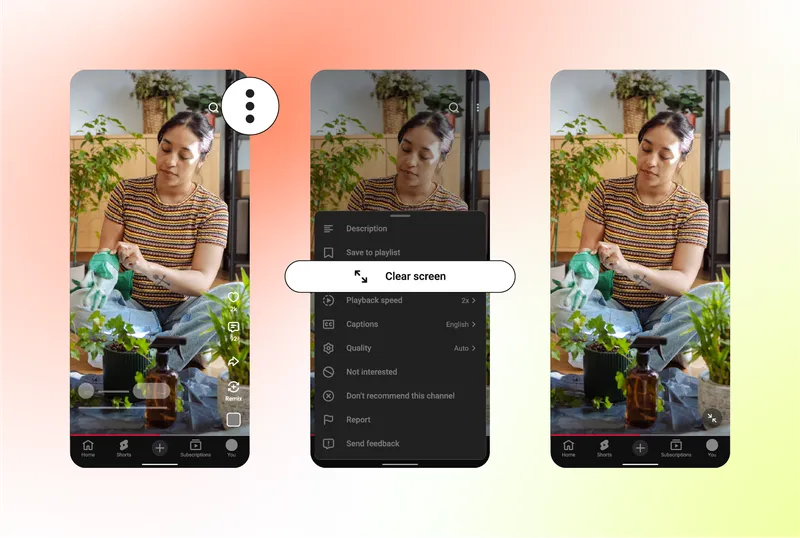
The YouTube Team says Shorts is getting Clear Screen mode, 2x playback speed, easier mute controls, a heart icon in place of thumbs-up, and sharper feed controls through “Not Interested” and “Don’t recommend this channel.” YouTube is also retiring the dislike button for Shorts because the signal can mean anything from poor audio quality to personal taste.
Meta is bringing back Facebook Creator Studio as an AI-powered companion app for creators, starting with a small early access community before a broad launch. The app will integrate Meta's creator assistant, surface daily priorities, show tailored recommendations, track goals, highlight important comments, and draft replies in the creator's voice for approval. Meta is also splitting Professional Dashboard into separate Creator Dashboard and Business Dashboard experiences over the next couple of months.

TOOLS AND RESOURCES
Roger Montti reports that WordPress is considering a Knowledge Custom Post Type for core, after adding it as an experimental Gutenberg feature for site guidelines such as goals, voice, image preferences, block rules, and accessibility requirements. The proposal is meeting resistance from developers who say it feels AI-driven, incomplete, and better suited for a plugin than core. There are six objections, including core bloat, higher-priority needs like native multilingual support, unclear human use cases, and concern that the feature may serve Automattic’s enterprise users more than average WordPress sites.
WHAT I'VE BUILT FOR YOU
Floyi - Build Topical Authority that wins in Google and AI Search. Don’t just plan your content strategy - make it unstoppable.
ReplyDeck - Be active on Reddit without living on Reddit. Schedule replies, stay present in the threads that matter, and get your time back.
TopicalMap.com Service - Let us do the heavy lifting. We handle the research, structure, and strategy. You get a custom topical map designed to boost authority and dominate your niche and industry.
Topical Maps Unlocked 2.0 - Unlock the blueprint to ranking success. Master the art of structuring content that search engines (and your audience) love - and watch your rankings soar.
AD
Learn AI in 5 minutes a day
You don't have to scroll every AI thread, track every new tool, or watch every demo.
The Rundown AI breaks it all down for you — the latest AI news, tools, and tutorials in one free 5-minute email every morning.
Trusted by 2M+ professionals at Apple, Google, and NASA.
What Did You Think of This Week's Wave? |
LIKE DIGITAL SURFER?
Find me and others in the Digital Surfer Discord community.
I’d also love to know what you think and if you have any ideas for the newsletter. Reply or email me at [email protected].
I’d also appreciate it if you shared it with fellow digital surfers.
You currently have 0 referrals, only 3 away from receiving LinkedIn Shout-out.
Have a great week taking your SEO and digital marketing to another level!
And don’t forget to drag the Digital Surfer emails to your Primary Inbox 🌊
Reply