- Digital Surfer
- Posts
- Built it. Still waiting.
Built it. Still waiting.
Will they come? Wave 284; Core Update Starts; Spam Update Came and Went; Google-Agent is Coming; Claude's OpenClaw; Bye Bye Sora; Wiki Says No AI; and Much More!

Yoyao
March 28, 2026 • Est. Learning Time: 13 minutes
FIRST …
If you build it, they will come.
I believed that longer than I should have.
I've been heads-down building Floyi for over a year. You know how the story is supposed to go.
Ship the thing. Post about it. Watch the numbers climb.
That's not my story. Not yet.
What I'm good at is building. What I'm still figuring out is the marketing. Which is its own kind of irony when you spend your days building a content strategy tool.
But I keep shipping. Because the alternative is stopping.
The last two releases came four days apart. Both of them came from the same place: listening to what users actually need and building toward it.
The goal with Floyi has always been simple. You shouldn't need five tools to answer one question: am I building authority on the topics that matter?
Most teams answer that by exporting a keyword list, dropping it into a rank tracker, dropping it again into an AI visibility tool, and then trying to remember which topics were strategic and which were just noise.
That's over. Your topical map is now the source of truth for everything. Your SERP rankings, your AI visibility, your competitor positions, all anchored to the strategy you built. Not a generic keyword list. The exact topics you decided to own.
Here's what shipped in the last week:
Silo Analysis breaks your competitive picture down by content pillar across both traditional search and AI search.
Brand Visual Style analyzes your site's design language and uses it to guide the new AI image generation inside the content editor.
Strategy Essentials are now free on every plan - even free. Brand Foundation, buyer personas, topical research, topical maps. Zero barrier to building a real content strategy.
Auto-generated Schema for every article, published automatically to WordPress. It's just done.
Now it's time to grow. And since I’m clearly better at shipping than marketing, I'll just leave this here:
if you know any good marketers, send them my way.

AD
Attio is the AI CRM for modern teams.

Connect your email and calendar and Attio instantly builds your CRM. Every contact, every company, every conversation — organized in one place. Then ask it anything. No more digging, no more data entry. Just answers.
SEO + GEO
Google has launched the March 2026 core update, its first core update of the year, with the rollout expected to take up to two weeks to complete. Google describes it as a regular broad update meant to better surface relevant, satisfying content from all types of sites, and it follows just days after the March spam update. Too bad it’s not as fast as …
Google rolled out the March 2026 spam update on March 24 and completed it in 19 hours and 21 minutes, making it the fastest spam update completion on record. The update applies globally and to all languages, following the standard spam update framework Google uses to target manipulative practices across search results.
Aimee Jurenka argues that schema markup is useful for AI search, but mostly as infrastructure rather than a shortcut to citations or instant visibility gains. The piece says schema helps make entities, attributes and relationships explicit, and that connected implementations using stable @id values and @graph structures can function like a lightweight internal knowledge graph. It also draws an important line between what is confirmed and what is speculative: Google AI Overviews and Bing Copilot have both said structured data helps them understand content, but platforms like ChatGPT and Perplexity have not publicly confirmed how they use schema.
My Take: Schema is one of those things people either overhype or dismiss, when the truth is that it is useful because it gives machines cleaner context to work with. It will not save weak content, but it does make it easier for search and AI systems to understand who you are, what the page is about and how your entities connect. Schema reduces ambiguity around brand, author and topic relationships while supporting both traditional SEO and AI-era parsing. It’s why Schema generation is a big part of the publishing side of Floyi.
Kevin Indig analyzes citation patterns in ChatGPT and suggests that AI source selection is highly concentrated, with the top 10 domains in a topic capturing 46% of citations and the top 30 taking 67%. The article also notes that pages ranking first in Google were cited by ChatGPT 43.2% of the time, or 3.5 times more often than pages ranking beyond the top 20 results, while also showing that ranking well still does not guarantee citations. Another key finding is that citation breadth matters more than raw citation count, because domains that show up across many distinct prompts gain a more durable seat at the table.
My Take: The part I would focus on is not just citation count, but citation breadth across the prompts that matter to your category. That is much closer to how I think about topical maps and what Floyi does - where the goal is to see whether you are building topical coverage across the important questions to your brand and audience or letting competitors own the cluster.
Leigh McKenzie explains how Google-Agent is a new user-triggered fetcher used by Google-hosted AI agents to navigate the web and take actions on behalf of users. The rollout is expected to happen over the next few weeks, and Google cites Project Mariner as one example of the kind of agent this infrastructure supports. The immediate SEO takeaway is not traffic volume but visibility: site owners should start monitoring logs, reviewing firewall and CDN rules, and making sure legitimate agent traffic is not being blocked by default. This is one of the clearest signals yet that search is starting to shift from crawlers indexing pages to agents actively evaluating and interacting with them on a user's behalf.
Sani Manic argues that the optimization stack is expanding from SEO, AEO and GEO into what he calls Agentic AI Optimization, or AAIO, where the goal is not just to be found or cited by AI systems but to make websites usable by autonomous agents. He frames discovery, citation and action as the three layers that tie to a broader infrastructure moment around standards like MCP, AGENTS.md and other protocols emerging through the Agentic AI Foundation. Websites now have two audiences, humans and machines, and that brands need to prepare for agents that research, compare and complete tasks on behalf of users.
My Take: The acronym will probably be debated, but the core idea is right. A lot of sites are still built as if the only job is to persuade a human after the click, when the next layer is making sure AI systems can understand the brand, navigate the site and complete tasks without guessing.
Gaetano DiNardi argues that most brands are misreading macro studies showing Reddit and Wikipedia dominate aggregate LLM citations, then turning that top-line data into flawed GEO strategy. The piece says high-intent AI recommendations are usually driven by niche category sources, owned content, and long-established brand sentiment, not easily manufactured Reddit threads or Wikipedia pages. It also warns that attempts to game those platforms can backfire because moderators remove self-promotional content and AI systems may still ingest the deleted or flagged material.
SEO + GEO Ripples
Google tightened Merchant Center rules for out-of-stock product pages, now requiring a visible disabled buy button plus availability messaging that matches the product feed exactly. It looks minor, but it removes a common workaround and creates one more way for ecommerce teams to trigger disapprovals if page UX and feed data drift out of sync.
Bing Webmaster Tools now let’s you click grounded queries in the AI search performance section to see what pages are being cited for those specific queries. Just like mapping queries to regular search.
AI
Claude’s “OpenClaw“ - Anthropic's Cowork now lets users assign tasks to Claude from a persistent thread that syncs across phone and desktop, with Claude deciding whether work should run in Cowork or Claude Code and then returning the finished output later. The setup gives Claude access to local files, connectors, plugins and desktop apps through computer use, effectively turning mobile prompts into remote task dispatch for a desktop-based agent. Anthropic also positions memory, recurring tasks and cross-device continuity as core parts of the workflow, making this feel less like chat and more like an always-on operational layer.
My Take: I wonder why Anthropic doesn’t allow OAuth to be used with OpenClaw.
GitHub will begin using data from Copilot Free, Pro and Pro+ users to train and improve its AI models starting April 24, unless users explicitly opt out in settings. The policy covers inputs, outputs, code snippets, surrounding context, comments, file names, repository structure and feature interactions, while excluding Copilot Business, Copilot Enterprise and enterprise-owned repositories. Opt-out in your GitHub settings:

check your GitHub Copilot settings - near the bottom
Here’s a breakdown of the fallout from OpenAI's decision to shut down Sora and end its Disney partnership, a deal that was supposed to integrate AI video generation into Disney+ and serve as a growth lever for the streaming platform. Disney is expected to recoup its billion-dollar investment but loses the narrative around AI-powered user-generated content that Wall Street was buying into. The editors note that new CEO Josh D'Amaro can distance himself from a deal he did not make, and that the collapse could buy Disney some goodwill with the creative community.
OpenAI says it is upgrading shopping inside ChatGPT with richer visual browsing, side-by-side product comparisons, image-based inspiration, and more up-to-date product information, all aimed at helping users move from vague intent to purchase decisions without leaving the chat. They are expanding the Agentic Commerce Protocol to handle product discovery, giving merchants a way to push feeds and promotions directly into ChatGPT through integrations with partners like Salesforce, Stripe, Shopify, and Walmart. The company is also backing away from its earlier Instant Checkout approach in favor of letting merchants use their own checkout flows, which signals that OpenAI sees discovery, not transaction processing, as the wedge it can win first - remember Walmart saying ChatGPT checkout sucked in last week’s newsletter?
Google Research introduces TurboQuant, a compression method designed to shrink high-dimensional vectors and key-value cache memory without sacrificing model accuracy, with reported gains including at least 6x KV memory reduction and up to 8x faster attention-logit performance on H100 GPUs. The work combines TurboQuant with QJL and PolarQuant to reduce the usual memory overhead that makes vector quantization less efficient in practice, while still preserving strong recall in vector search and long-context reasoning tasks. Google frames this as more than model optimization: the same math can improve large-scale semantic search systems by making vector indices faster to build, cheaper to store, and more precise at retrieval time.
My Take: The search implication here is easy to miss but important. If semantic retrieval gets dramatically cheaper and faster, search engines can afford to run deeper vector matching across more of the index and in more stages of ranking, not just as a limited add-on. That could push search algorithms even further away from keyword-first retrieval toward systems that score intent, similarity, and context much earlier in the pipeline, which would make exact-match SEO signals relatively less dominant over time.
CNBC reports that OpenAI's new ads business has already crossed $100 million in annual recurring revenue less than two months after its U.S. pilot launched for free ChatGPT users and ChatGPT Go subscribers. The company says it is working with more than 600 advertisers, has seen no impact on privacy-related trust metrics, and is beginning to test expansion into Canada, Australia and New Zealand. OpenAI also says ads are clearly labeled, appear at the bottom of responses, and are excluded from categories like politics, health and mental health, with less than 20% of eligible users seeing them on a given day.
Anu Adegbola reports that early testing found ChatGPT ads appearing on roughly one in five free-tier questions in new mobile conversations, usually as a sponsored website link matched to the topic of the prompt. She says ads can even show competitor placements when a user mentions a brand by name, bringing a familiar paid search tactic into conversational AI. OpenAI says targeting is based on question topic, past chats and saved memory, while ads remain separate from the answer itself and are not shown to under-18 users or near certain sensitive categories.
Also worth noting: Search Engine Roundtable / Glenn Gabe reports that early advertisers are getting little to no performance data, which means the product is scaling faster than its measurement layer.
HUMAN Security says AI-driven traffic nearly tripled in 2025, with agentic AI traffic up 7,851% year over year and automation overall growing eight times faster than human traffic. The report, based on more than one quadrillion interactions, says most AI-driven traffic is concentrated in retail, media and travel, while OpenAI alone accounted for roughly 69% of observed AI bot traffic. It also shows how quickly the line between useful automation and abuse is narrowing, noting that only half a percentage point separates benign automation from malicious automation across the interactions HUMAN analyzed.
Wikipedia has formalized a hard line on AI-written content, stating that large language models are prohibited from generating or rewriting article content except in two narrow cases: basic copyedits to an editor's own writing after human review, and translation workflows that follow Wikipedia's separate LLM-assisted translation guidance. The policy argues that LLM output often violates core content standards around verifiability and source support, and it warns that even seemingly light edits can change meaning in ways that are not backed by cited references.
AI Ripples
Gemini 3.1 Flash Live is Google's new real-time audio model, with lower latency, stronger tonal understanding, and benchmark gains in complex audio task execution. Google says the model now powers developer access through the Gemini Live API, enterprise customer experience use cases, and global rollouts across Search Live and Gemini Live in more than 200 countries.
OpenAI added plugins to Codex, bundling skills, app integrations and MCP servers into a searchable library that makes setup more one-click and pushes Codex beyond pure coding tasks. It is partly a catch-up move against Claude Code, but it also shows OpenAI wants Codex to become a broader agent workspace for knowledge work.
MARKETING
Apple says it is consolidating Apple Business Essentials, Apple Business Manager and Apple Business Connect into a single new platform called Apple Business, available April 14 in more than 200 countries and regions. The platform combines mobile device management, business email and calendar, identity integrations, app distribution, location management, branded place cards, Maps insights, and this summer a new option for local ads in Apple Maps for businesses in the U.S. and Canada.
Jono Alderson argues that SEO has historically measured the wrong layer by focusing on rankings, clicks, impressions and other interface metrics that describe how search results are presented rather than how competitiveness is actually built. He says AI systems make that weakness harder to ignore because they increasingly evaluate brands, products and reputations across the web instead of simply ranking isolated documents, which makes visibility more of an outcome than a root metric. The article also warns that prompt tracking and LLM visibility dashboards risk repeating the same mistake by measuring unstable interface outputs instead of the underlying forces that shape recommendations. His proposed reset is to think more like marketing science and evaluate structural drivers such as mental availability, physical availability, reputation, distinctiveness and experience integrity.
My Take: I agree with the core argument that old SEO metrics are losing their usefulness as the interface changes, and that competitiveness matters more than isolated ranking signals. Where I push back is that competitiveness still has to become measurable if you anyone to report to and want to act on it. A lot of people are right when they say these tools feel useless because they are often measuring the wrong prompts for your brand and your audience. The practical middle ground is defining the topics, entities and competitors that actually matter to your market. That’s why you create a topical map. Then tracking where you are being outshined across that map instead of pretending generic prompt visibility alone is the answer.
Anu Adegbola reports that advertisers can now generate videos up to 10 seconds long directly inside Google Ads by uploading as many as three static images into Asset Studio and letting Veo create motion-based creative for YouTube placements. The workflow also connects with Nano Banana for further edits like background swaps, messaging changes and audience-specific adaptations, pushing more of the creative process inside Google's ad stack.
My Take: This is exactly how AI gets embedded into ad platforms: not as a flashy standalone tool, but as a way to remove one of the biggest operational bottlenecks in campaign execution. If video production becomes this cheap and fast, the competitive edge shifts away from who can make assets at all and toward who can test angles, hooks and audiences faster than everyone else.
Marketing Ripples
Google Business Profile is testing AI-generated review replies, with suggested responses appearing for some businesses across markets including the U.S., Brazil and India. The feature could save time, but it also raises the risk of generic or over-automated responses in one of the highest-trust parts of local marketing.
CONTENT
Jason Barnard says that the entity home, usually a brand's About page or equivalent identity anchor, has become one of the most important pages on a site because it helps bots, algorithms and humans resolve who the brand is and whether it should be trusted. The article says this page is not a ranking trick or a schema shortcut, but a foundational identity layer where claims, evidence and consistent positioning come together before being corroborated by third-party sources. It also draws a useful distinction between the entity home itself and the broader entity home website around it, where supporting pages explain expertise, peers, companies, press and other facets that search and AI systems use to build confidence.
SOCIAL MEDIA
Reddit is expanding its shopping ad products with new Collection Ads, Community and Deal overlays, and a Shopify integration designed to make Dynamic Product Ads easier to launch and more effective. The company says high-intent shopping conversations on Reddit grew 40% year over year, that 84% of shoppers feel more secure in purchases after researching on the platform, and that Reddit DPA delivered 91% higher ROAS year over year in Q4 2025. Early Collection Ads advertisers are also seeing an 8% lift in ROAS, while Reddit positions its community signals and product discussions as a differentiator versus more traditional paid social environments.
Danny Goodwin reports that YouTube is testing AI-generated summaries in the Android app, with some users seeing expandable summary boxes replace the original video titles in feed cards. The thumbnails remain, but the title field disappears in these tests, forcing users to tap for more context and giving YouTube's AI a bigger role in framing what a video is about. That matters because titles are still one of the clearest signals creators control for click-through, keyword targeting and brand voice, and auto-generated summaries introduce both friction and the risk of misrepresentation..

Andrew Hutchinson reports that YouTube is testing a new preview format that shows users five to 10 short highlight clips from a recommended video after they tap the entry card on the homepage, giving them a better sense of the actual content before watching in full. The feature is meant to reduce reliance on exaggerated thumbnails and titles by letting YouTube's system surface the moments it thinks will best represent the video. That could improve content discovery for viewers, but it also shifts more packaging control away from creators who have spent years optimizing thumbnails as a core growth lever.
Sarah Perez reports that Reddit will start labeling automated accounts that provide a service to users and require suspected bot accounts to verify they are human before they can keep operating normally. The company says verification will only be triggered by suspicious activity or technical markers, while acceptable methods may include passkeys, biometric tools, and in some regions government ID to satisfy local regulations.
Ivan Mehta reports that X quickly paused a planned update to creator payouts that would have put more weight on impressions from a poster's home region, after widespread backlash from users who rely on global and multilingual audiences. X had framed the change as a way to discourage people from gaming attention in larger markets like the U.S. and Japan, but critics argued it would also punish creators whose topics naturally attract international readers. Elon Musk reversed course within hours, saying the company would stop moving forward with the update until further consideration.
WAYS WE CAN WORK TOGETHER
Floyi - Build Topical Authority that wins in Google and AI Search. Don’t just plan your content strategy - make it unstoppable.
TopicalMap.com Service - Let us do the heavy lifting. We handle the research, structure, and strategy. You get a custom topical map designed to boost authority and dominate your niche and industry.
Topical Maps Unlocked 2.0 - Unlock the blueprint to ranking success. Master the art of structuring content that search engines (and your audience) love - and watch your rankings soar.
AD
2026’s biggest media shift
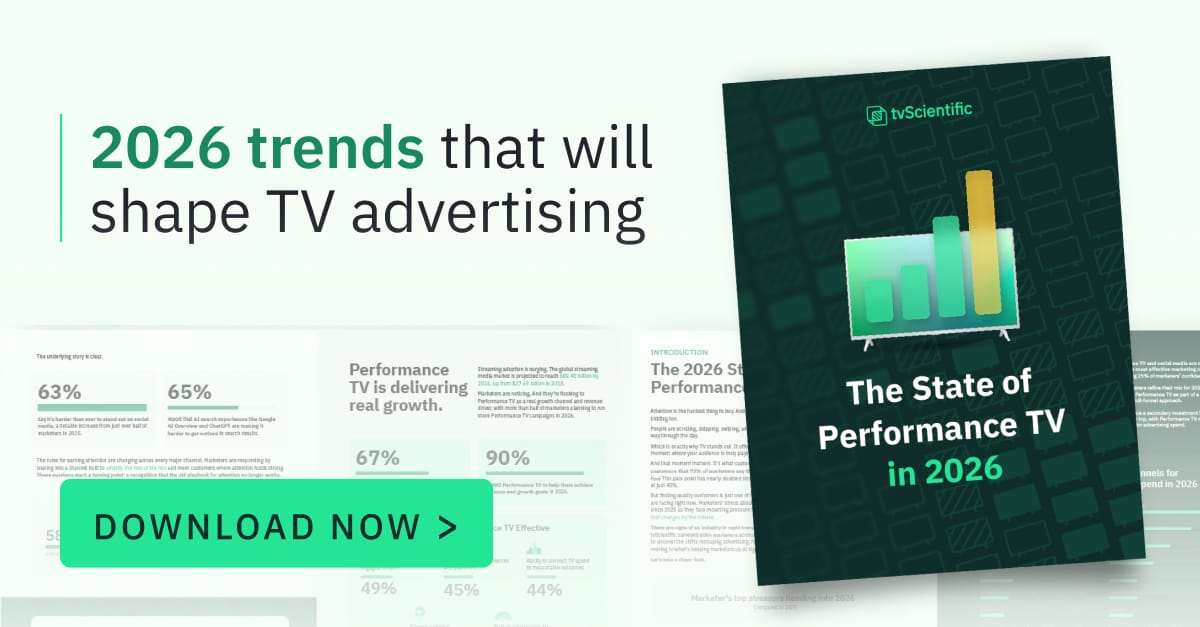
Attention is the hardest thing to buy. And everyone else is bidding too.
When people are scrolling, skipping, swiping, and split-screening their way through the day, finding uninterrupted moments where your audience is truly paying attention is the priority.
That’s where Performance TV stands out.
Check out the data from 600+ marketers on the most effective channels to capture audience attention in 2026.
What Did You Think of This Week's Wave? |
LIKE DIGITAL SURFER?
Find me and others in the Digital Surfer Discord community.
I’d also love to know what you think and if you have any ideas for the newsletter. Reply or email me at [email protected].
I’d also appreciate it if you shared it with fellow digital surfers.
You currently have 0 referrals, only 3 away from receiving LinkedIn Shout-out.
Have a great week taking your SEO and digital marketing to another level!
And don’t forget to drag the Digital Surfer emails to your Primary Inbox 🌊
Reply